The latest questionnaire report of the central bank is here! Bankers and entrepreneurs see China’s economy this way →
Recently, the People’s Bank of China released three routine questionnaire reports for bankers, entrepreneurs and urban depositors in the fourth quarter. The three reports reflect the feelings of different groups on the current economy and their future economic expectations from the macro-economic enthusiasm of bankers and entrepreneurs, the overall demand for loans, business prosperity and profitability.
On the whole, in this survey, bankers’ macroeconomic expectations for the first quarter of 2023 are more positive, and the overall demand index of banks’ loans has also improved.
Banker: The increase in the overall loan demand index is more positive for the next quarter.
The results of the national bankers’ questionnaire survey in the fourth quarter show that bankers are more positive about the macroeconomic expectations in the first quarter of 2023. For the next quarter, the expectation index of bankers’ macroeconomic heat is 29.3%, which is 11.9 percentage points higher than this quarter.
Under the control of the central bank, corporate credit demand has also improved. According to the survey, the overall demand index of loans in the fourth quarter increased by 0.5 percentage points from the previous quarter to 59.5%. By industry, the loan demand index of manufacturing industry, infrastructure and wholesale and retail industry are 62.2%, 60.6% and 57.1% respectively. It is worth noting that the loan demand index of real estate enterprises in the fourth quarter was 43.7%, up 3.1 percentage points from the previous quarter.
According to the survey, the perception index of monetary policy in the fourth quarter was 68.0%, down 4.4 percentage points from the previous quarter and up 13.9 percentage points from the same period of last year. Among them, 38.0% bankers think that monetary policy is "loose"; 60.0% of bankers think that monetary policy is "moderate". Bankers are more optimistic about the expectation of monetary policy in the next quarter. The expectation index of monetary policy perception is 69.6%, which is 1.6 percentage points higher than this quarter.
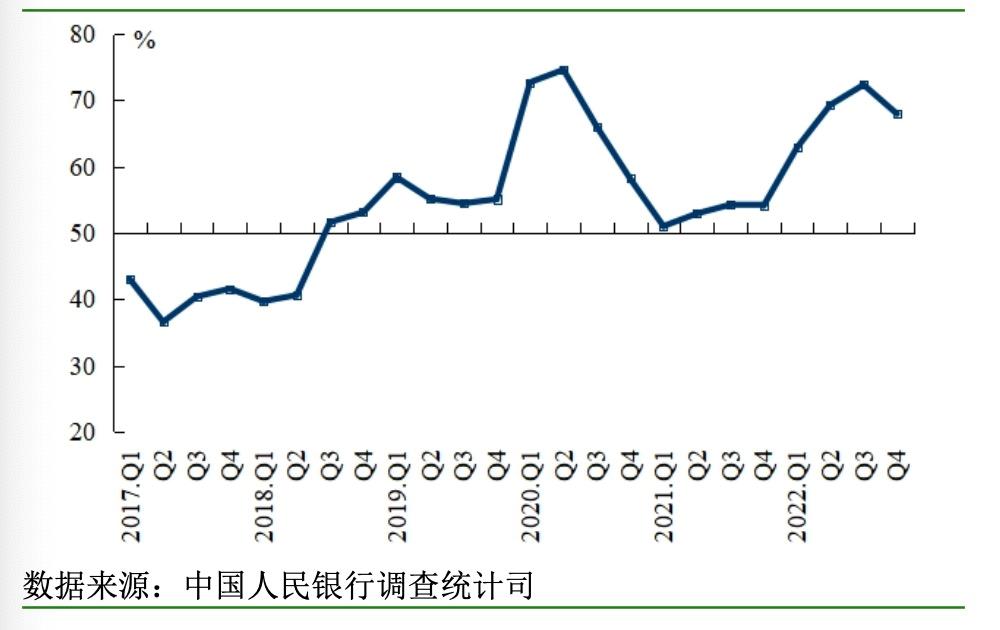
△ Monetary Policy Perception Index
Entrepreneur: the perception index of product sales price and raw material purchase price is heating up
The survey shows that in the fourth quarter, the product sales price perception index and the entrepreneur’s raw material purchase price perception index were 47.2% and 58.5%, respectively, both up by 1.8 percentage points over the previous quarter. Among them, 72.7% of entrepreneurs think that the sales price of products this season is "flat" compared with last season; 64.5% of entrepreneurs think that the purchase price of raw materials this season is "flat" compared with last season.
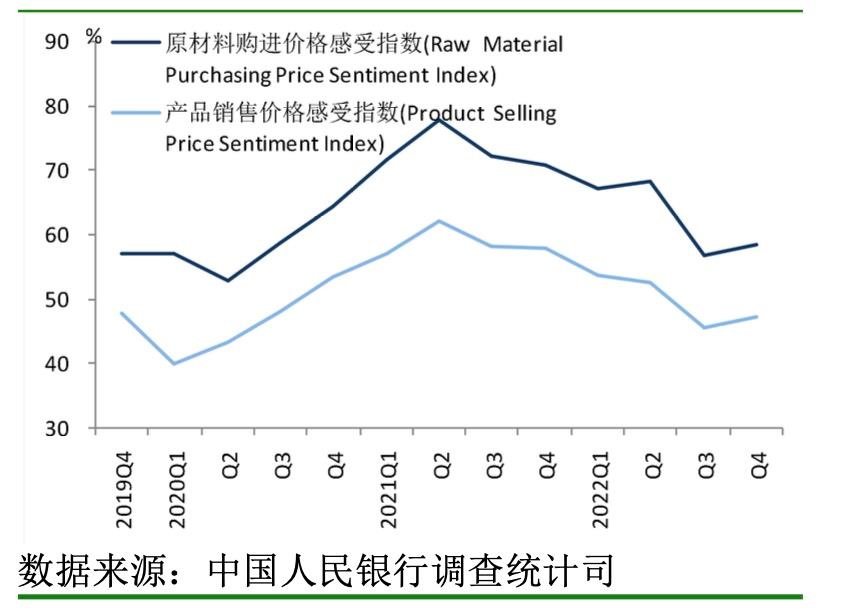
△ Product sales price perception index and raw material purchase price perception index
According to the survey, the export order index in the fourth quarter was 38.9%, down 3.3 percentage points from the previous quarter and 9.8 percentage points from the same period of last year. Among them, 13.2% of entrepreneurs think that the export orders in this quarter are "increased" compared with the previous quarter, and 51.5% think that they are "flat". The domestic order index was 44.1%, down 0.6 percentage points from the previous quarter and 7.1 percentage points from the same period of last year. Among them, 16.8% of entrepreneurs think that domestic orders in this quarter are "increased" compared with last quarter, and 54.6% think it is "flat".
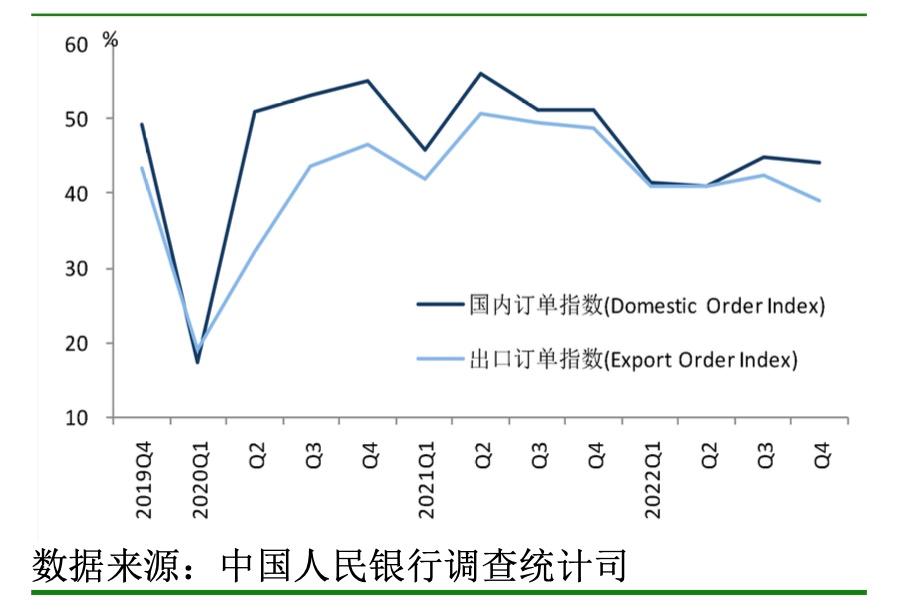
△ Export order index and domestic order index
Urban depositors: residents’ willingness to save has improved.
In the fourth quarter, the People’s Bank of China conducted a questionnaire survey of 20,000 urban depositors in 50 cities across the country. The results showed that the residents’ willingness to save increased in the fourth quarter, with 61.8% of the residents inclined to "save more", 22.8% inclined to "spend more" and 15.5% inclined to "invest more" respectively. The top three preferred investment methods of residents are "banking, securities, wealth management products of insurance companies", "fund trust products" and "stocks", and the proportion of residents who choose these three investment methods is 44.1%, 20.4% and 14.7% respectively.

△ Residents’ willingness to consume, save and invest
(CCTV reporter Liu Ying Dong Bin)