No interest rate cuts for the time being! The central bank just released

Original Zhongfang Daily China Real Estate Daily

This means that China’s future monetary policy still has room for easing, but this does not mean that interest rate cuts are imminent.

Xu Qian, reporter of China Housing News, reports from Beijing.

The market expected LPR to be lowered, and it fell through.

On September 20th, the central bank released the loan market quotation rate (LPR) in September: the one-year LPR is 3.35%, and the five-year LPR is 3.85%. Compared with the LPR data in August, the LPR remained unchanged in September.

On this day, the central bank also carried out a seven-day reverse repurchase operation of 571.9 billion yuan, and the winning bid rate was 1.7%, which was the same as before.

The day before, the Federal Reserve announced the latest interest rate resolution: lowering the target range of the benchmark interest rate to 4.75% to 5%, and cutting interest rates by 50 basis points at one time, which provided more independent space for China’s monetary policy adjustment.

As a result, many market participants predict that China’s central bank will follow up with interest rate cuts with a high probability, which may be 20 basis points. However, China’s central bank has chosen a relatively conservative strategy, and monetary policy still adheres to the tone of "taking me as the mainstay".

In fact, since this year, China’s central bank has cut interest rates twice. Once in February, the LPR over five years was greatly reduced by 25 basis points to 3.95%; The other time was in July, the 5-year LPR was lowered by 10 basis points again, and the LPR entered a historical low. At present, it is still in the observation period of the policy effect after the interest rate cut in July, and the urgency of short-term downward adjustment is not great.

On September 5, at the press conference on the theme of "Promoting High-quality Development" held by the State Council Office, the voice of the top management of the central bank revealed the next monetary policy orientation.

Lu Lei, deputy governor of the central bank, said that the People’s Bank of China will continue to adhere to the supportive monetary policy, speed up the implementation of the policies and measures that have been introduced, and more strongly support the high-quality economic development. In terms of interest rate in the future, we should give full play to the driving role of the recent policy interest rate and the quoted interest rate in the loan market, so as to promote the steady decline of corporate financing and residents’ credit costs.

This means that China’s future monetary policy still has room for easing, but this does not mean that interest rate cuts are imminent.

"Policy adjustments such as RRR cuts and interest rate cuts also need to observe economic trends." Zou Lan, director of the Monetary Policy Department of the Central Bank, said at this news conference that due to factors such as the speed at which bank deposits are diverted to asset management products and the narrowing of the bank’s net interest margin, the deposit and loan interest rates are facing certain constraints.

This statement by the central bank shows the difficulty of further lowering interest rates.

Recently, the biggest change in the deposit and loan environment of banks lies in the higher cost of the source of funds. Since the beginning of this year, with the decline of deposit interest rate and the control of "manual interest payment" of deposits, deposits have moved to the bank wealth management market. In the first half of the year, the scale of bank wealth management exceeded 29 trillion yuan, approaching an all-time high.

At present, the pressure on the net interest margin of banks is relatively large as a whole. According to the State Financial Supervision and Administration, the net interest margin of the banking industry was 1.54% in the second quarter of this year, which was lower than the warning line of 1.8% for six consecutive quarters.

"If the policy interest rate is continuously lowered in the short term and the LPR quotation is followed up, and the large-scale stock mortgage interest rate also has a large room for downward adjustment, the bank’s net interest margin will face a large downward pressure in the second half of the year, which is not conducive to the stability of bank operations; If the deposit interest rate is lowered significantly with a view to stabilizing the interest margin, it may lead to the risk of large-scale’ moving’ of bank deposits to asset management products such as wealth management, which is also not conducive to the stability of bank operations. " Wang Qing, chief macro analyst of Oriental Jincheng, said.

At the same time, "the pulling effect of lowering interest rates on the real estate market is obviously weakened." Li Yujia, chief researcher of the Housing Policy Research Center of Guangdong Urban and Rural Planning Institute, said that from 2022 to now, mortgage interest rates has dropped by about 200 basis points, but its pulling effect on the commercial housing market is obviously weakened. The main reason is that the market’s expectation of housing prices is pessimistic, the number of second-hand housing listings is rising, and the trend of "price for quantity" is difficult to reverse, which cannot be changed by interest rate cuts.

In this case, the main purpose of the central bank to continue to cut interest rates is not to stimulate the property market, but to reduce the burden on entities and private investment, which is necessary.

"The policy effect of RRR reduction at the beginning of the year is still emerging. At present, the average statutory deposit reserve ratio of financial institutions is about 7%, and there is still some room. The central bank will closely observe the effect of the policy and reasonably grasp the intensity and rhythm of monetary policy regulation according to the economic recovery, the realization of the target and the specific problems faced by macroeconomic operation. " Zou Wei said.

"Considering the current economic situation and price trend, China’s central bank may cut the main policy interest rate in the fourth quarter. In addition, focusing on strengthening coordination and cooperation with fiscal policies and supporting the issuance of government bonds, there is also the possibility of RRR reduction in the fourth quarter. " Wang Qing predicted.

Dong Ximiao, chief researcher of Zhaolian, also said that considering the internal needs and external changes, the People’s Bank of China will probably implement a comprehensive RRR cut of 0.25 ~ 0.5 percentage points during the year, reduce the policy interest rate by 10 ~ 20 basis points, promote the simultaneous downward trend of LPR, and promote the steady decline of social comprehensive financing costs.

Compared with the interest rate cut, the voice is higher. When will the interest rate adjustment of stock mortgage come? The IPR did not move, in the view of some people, or to provide space for lowering the interest rate of existing mortgage loans.

According to institutional data, the stock mortgage generated between 2015 and 2022 is about 30 trillion yuan, with an average interest rate of about 5.2%; After the interest rate of the first home loan was lowered by 73 basis points in August last year, the weighted average interest rate dropped to about 4.47%. The current new mortgage interest rate is as low as 3.1%, and it may continue to drop.

The failure to adjust the interest rate of existing mortgage loans has also affected the admission of potential buyers, who are worried that the interest rate of mortgage loans will fall again.

"At this stage, the market has a high voice for lowering the interest rate of existing mortgage again. Lowering the interest rate of existing mortgage is conducive to alleviating the phenomenon of early mortgage repayment, enhancing the sustainability of residents’ debt, promoting the repair of residents’ consumer demand and forming a fairer financing environment." Wen Bin, chief economist of China Minsheng Bank, said.

The latest news from the market shows that China may reduce the interest rate of existing housing loans as early as September, and some interest rates may be lowered by as much as 50 basis points; Commercial banks are making final preparations to meet the upcoming adjustment of mortgage interest rates.

If the news can land, it will undoubtedly be an inspiration to the property market.

Original title: "Do not cut interest rates for the time being! The central bank just released "

Read the original text

"Shanghai Fortress" exposes the ultimate poster, Luhan Shu Qi starts the human defense war

Gray Eagle Squad, Jiang Yang (Lu Han)


1905 movie network news It will be released on August 9. Directed by Teng Huatao, it is based on the novel of the same name in Jiangnan. Starring Luhan and Shu Qi, and starring Shi Liang, Gao Yixiang, Wang Gongliang, Wang Sen and Sun Jialing, the sci-fi war movie "Shanghai Fortress" is the ultimate poster today. In the poster, the alien mothership and predators are coming ferociously, and half of the city is about to sink underground. Lu Han and Shu Qi are in full force, and the ultimate battle to defend humanity is about to start.

It is reported that the film "Shanghai Fortress" lasted for six years and carried out a new exploration of domestic science fiction films. This is the first time that an alien civilization has been confronted in a domestic film, and the first time that Shanghai, China has become a future battlefield. For the first time, audiences will also see the sinking of the entire city and experience the feeling of "being on the battlefield".


The commander of the movie "Shanghai Fortress", Lin Lan (played by Shu Qi)

Sink a city below the surface

The first "sunken city" in a Chinese movie


In the movie "Shanghai Fortress", the alien civilization of the future world raided the earth, and as other cities sank one after another, Shanghai, China became the last hope of mankind. The poster exposed today shows part of the battlefield in Shanghai. The mothership descended, the war raged, and the former glorious city was shrouded in gunsmoke. Among them, the most shocking is the sinking of half the city, which is called "Lu Shen" in the movie.

Teng Huatao, the director, said: "Shanghai Lu Chen is the first time a Chinese-language film has designed a’sunken city ‘. Lu Chen’s lens involves the collapse and fall of a large area, a large area, and a large environment. It is very difficult." In the end, what kind of future battlefield we will see in the movie is full of expectations.


The movie "Shanghai Fortress" Shanghai cannon commander, Yang Jiannan (Gao Yixiang)

Bring an "imaginary text" to the big screen

The original book Jiangnan: amplified the war, but also preserved the soul


The film "Shanghai Fortress" is based on the novel of the same name published by Jiangnan in 2009. In the past ten years, it has accumulated the youthful memories of countless fans. When it comes to the difficulties of adapting the novel into a movie, Jiangnan also participated in the whole screenwriting work. When talking about the difficulties of adapting, Jiangnan said bluntly: "We have faced many challenges, not only to respect the original book, but also to consider the feasibility of the technology. We have done the adaptation work back and forth for nearly three years, which is a very difficult process."

It is reported that the film amplifies the war elements in the original book, but at the same time, Jiangnan also said that the film retains the "soul" of the original book, and the emotion is not diminished. "This is a movie with Chinese characteristics, and it presents the emotions between people, which is very Chinese," said Jiangnan.


The movie "Shanghai Fortress" Gray Eagle Squad, Zeng Yu (Wang Gongliang)


    The film "Shanghai Fortress" will be released on August 9. The film is adapted from the novel of the same name in Jiangnan, directed by Teng Huatao, starring Lu Han and Shu Qi, and starring Shi Liang, Gao Yixiang, Wang Gongliang, Wang Sen and Sun Jialing.

Huimin Bao Iteration 2.0: Covering 21 million people, is it about to refresh the speed of "Shanghai Huibao"?

Source: Finance from the media
Huimin Bao Iteration 2.0: The third Beijing Huimin Bao covering 21 million people has arrived, and will soon refresh the speed of "Shanghai Huibao"?
Source: Huibao Tianxia
Following the hot sales of Shanghai "Shanghai Huibao", Beijing’s third Huimin Insurance has also come, this time it is "Beijing Puhui Health Insurance". Compared with the first two, the third one seems to be menacing …
01
Beijing Puhui Health Insurance was officially launched, and Beijing Medical Insurance Bureau, Financial Bureau and Banking Insurance Bureau all came.
After Shenzhen exclusive medical care, Guangzhou Huimin insurance and Shanghai Huhuibao, another first-tier city Huimin insurance was announced.
On July 26, 2021, "Beijing Pratt & Whitney Health Insurance" was officially launched, which adopted unified pricing. Each person only needs to pay the premium of 195 yuan per year, and can enjoy the guarantee of the maximum insured amount of 3 million yuan.
Beijing Puhui Health Insurance is underwritten by PICC P&C Insurance, China Life Insurance, Taikang Pension Insurance, Taibao Life Insurance and Ping An Property Insurance, among which PICC P&C Insurance and China Life Insurance are the main underwriting units, while Taikang Pension Insurance, Taibao Life Insurance and Ping An Property Insurance are the joint underwriting units.
The main operating platform of "Beijing Puhui Health Insurance" is provided by Yiduyun, which claims to be the largest medical big data technology enterprise in China and has landed in Hong Kong stocks.
"Beijing Pratt & Whitney Health Insurance" is jointly guided by Beijing Municipal Health Insurance Bureau and Beijing Local Financial Supervision Administration, and supervised by Beijing Supervision Bureau of Bank of China Insurance Regulatory Commission. At its launch conference, George Macartney British consul, director of Beijing Medical Insurance Bureau, Hao Gang, member of the party group and deputy director of the Municipal Finance Bureau, and Wang Wei, deputy director of the Banking Insurance Regulatory Bureau, all attended the event and delivered speeches, showing their importance.
According to the introduction, "Beijing Pratt & Whitney Health Insurance" is closely linked with the basic medical insurance, as long as the insured persons (including urban workers’ basic medical insurance, urban and rural residents’ basic medical insurance, etc.) in Beijing are insured. Its guarantee responsibility covers the triple protection inside and outside the medical insurance catalogue:
First, the "out-of-pocket expenses for inpatients and outpatients" in the medical insurance catalogue can be claimed if it exceeds the threshold of Beijing’s medical insurance for serious illness in that year, with a maximum payment of 1 million yuan/year, 80% for healthy people and 40% for people with specific past illnesses.
Second, the out-of-pocket expenses of inpatients outside the medical insurance catalogue can be paid up to 1 million yuan/year, and healthy people can be paid only by meeting the annual deductible of 20,000 yuan and the annual deductible of 40,000 yuan for specific people with previous illnesses. The proportion of compensation for healthy people is 70%, and the proportion of compensation for specific people with previous illnesses is 35%.
Third, there are 100 kinds of high-priced special drugs at home and abroad, of which the maximum coverage of 25 kinds of domestic special drugs is 500,000 yuan/year, and the maximum coverage of 75 kinds of foreign special drugs is 500,000 yuan/year, with a total maximum coverage of 1 million yuan/year. The annual deductible of healthy people is 20,000 yuan, with a payment ratio of 60%, and the annual deductible of specific people with previous diseases is 40,000 yuan, with a payment ratio of 30%.
In addition, "Beijing Pratt & Whitney Health Insurance" also provides the insured with value-added services of five follow-up visits or on-site care after discharge for free.
The insurance date of "Beijing Puhui Health Insurance" is from July 26, 2021 to September 30, 2021, and all insurance policies will come into effect on January 1, 2022, with a guarantee period of one year (the value-added service date for reviewing accompanying consultation or home care will be from October 1, 2021, with a service period of 15 months).
02
Huimin Bao quickly broke out and iterated, and Beijing Puhui Health Insurance became a typical product in the 2.0 era.
It is worth noting that the "Beijing Pratt & Whitney Health Insurance" jointly launched by subsidiaries of five head insurance institutions is actually the third "Huimin Insurance" product in Beijing.
The first Beijing version of "Huimin Insurance" was officially launched on September 28th, 2020. It was promoted by 360 insurance brokers, and the participating insurance companies included Taikang Online, China Life Insurance, Zhongan Online, China Property Insurance, Zhonghui Mutual, yongcheng Property Insurance and Everyone Pension.
This product is eye-catching at an ultra-low price, with step-by-step billing. The minimum one year is only from 19 yuan, and the maximum guarantee is 3 million yuan; The insurance threshold is also extremely low. Anyone who participates in the basic medical insurance for urban workers or urban and rural residents in Beijing (including the new rural cooperative medical system) and is in the insurance state, regardless of age or occupation, can be insured, which means that even if he is sick, he can be insured. The deductible set is 20,000 yuan.
The guiding unit of "Beijing City Huibao" is the Beijing Municipal Health and Wellness Committee and the member unit of China Academy of Sciences.
Ten days after the launch of "Beijing City Huibao", the second Huimin insurance in Beijing was officially launched, referred to as "Beijing Jinghuibao". It is underwritten by two small and medium-sized companies, including Beijing Life Insurance Beijing Branch and AXA Tianping Beijing Branch. The third-party platform for providing services is Factor Health, a subsidiary of Yiduyun.
"Beijing Jinghuibao" does not adopt step-by-step pricing, but has a unified premium of 79 yuan, which can get insurance protection of up to 2 million yuan and 18 health services.
Similarly, the insurance threshold is correct, as long as all participants in Beijing’s social basic medical insurance can participate in the insurance, regardless of household registration, age and occupation, physical health status, physical examination and health notification. The annual deductible for hospitalization medical expenses is 20,000; 17 kinds of specific high-priced drugs cost 1 million, and the annual deductible is 0 yuan.
"Beijing Jinghuibao" also has guiding units, including the Civil Affairs Bureau of the Social Work Committee of Beijing Municipal Committee, the Beijing Big Data Administration Bureau and the Zhongguancun Science City Management Committee.
Compared with the first "Beijing City Huibao", the second "Beijing Jinghuibao" has obviously attracted a higher degree of attention. It is understood that its final insured number exceeds one million. Of course, compared with the permanent population of more than 20 million in Beijing, the insurance coverage rate is still low.
Now, a few months later, Beijing’s third Huimin insurance has also arrived, this time referred to as "Beijing Pratt & Whitney Health Insurance".
On September 10, 2020, two Huimin insurance products in Beijing were launched, which actually reflected the chaos in Huimin insurance market at that time.
2020 is regarded as the first year of Huimin Bao. Under the fierce market competition, it only took more than half a year for this product to go from exploration to outbreak.
Some people have divided the development of Huimin Insurance since 2020 into three stages:
January-July 2020 is the exploration period, during which only 12 products have been launched;
August 2020-January 2021 is the outbreak period, during which 96 projects were launched;
Since 2021, it has been a period of standardized development, and the speed of project launch has slowed down again.
During the outbreak of Huimin insurance, in order to seize the market, many regions, like Beijing, successively launched a variety of Huimin insurance products; In order to quickly occupy the land, some enterprises even simply gave up the basic characteristics of "one city, one policy" and launched Huimin insurance products for the whole province and even the whole country; Under the fierce competition, the insurance threshold of products is getting lower and lower, and the coverage is getting wider and wider; In order to improve the credibility of products, individual companies openly lied that they had been endorsed by the government … The chaos became more and more serious, so that China Banking and Insurance Regulatory Commission issued a document to regulate it.
In the end, the strong intervention of government departments has become one of the key factors to reverse the chaos of benefiting the people. Zhejiang province took the lead in issuing provincial-level guidance, and all parts of the province followed suit to introduce implementation measures, thus the Huimin insurance market began to enter the 2.0 stage. With the strong intervention of the government, its requirements for Huimin insurance have become increasingly clear, that is, to include people with diseases, to have high payout ratio and low expenses, and to some extent, it is getting closer to serious illness insurance.
After putting forward higher requirements for Huimin insurance, the government began to give more support, platform and promotion to Huimin insurance, which greatly improved the participation rate of Huimin insurance. In some areas, the coverage rate of Huimin insurance has reached more than 60%.
The third edition of Huimin Insurance "Beijing Puhui Health Insurance" launched by Beijing is undoubtedly another representative product after Huimin Insurance entered the "2.0" stage. Compared with the first two products, it has obviously given up the blind price war. The price of 195 yuan/year has already belonged to the "high price" in the pricing of Huimin Insurance, and the "platform" of the Municipal Medical Insurance Bureau, the Financial Bureau and the Banking Insurance Regulatory Bureau has injected market credibility far ahead of the two products.
03
The number of people insured by Shanghai Huibao reached 7.39 million. Can Beijing Puhui Health Insurance catch up with others?
The target that can be compared with "Beijing Puhui Health Insurance" is "Shanghai Huibao", which ended its insurance not long ago. Its annual premium is only 115 yuan, and it is not limited to previous medical history, household registration, age and account balance of medical insurance card over the years. Thanks to the joint efforts of many parties, "Huhuibao" was popular once it was launched, and the number of participants was constantly refreshed.
Statistics show that the number of people participating in the insurance has exceeded 1 million within 12 hours of its launch; Break through 1.5 million people in 24 hours; It broke through 2 million people in 31 hours; It broke through 5.75 million people in a month … Finally, by the end of the year, the number of people participating in "Shanghai Huibao" reached 7.39 million, which means that one out of every three people participating in Shanghai medical insurance has insured "Shanghai Huibao", which is a rare high insurance coverage rate for a megacity.
Can the benchmark "Shanghai Huibao" and "Beijing Puhui Health Insurance" continue to be "brilliant" or even surpass it? Let’s analyze the factors that have the greatest impact on the development of Huimin Insurance:
Endorsement by relevant government departments. As we all know, the most important factor affecting the development of Huimin insurance is the endorsement of relevant government departments, not the professional content such as guarantee responsibility.
Judging from the guidance and supervision units of "Huhuibao" and "Beijing Puhui Health Insurance", they are similar: "Beijing Puhui Health Insurance" is jointly guided by Beijing Medical Insurance Bureau and Beijing Local Financial Supervision Administration, and supervised by Beijing Banking Insurance Regulatory Bureau; Shanghai Huhuibao is guided by Shanghai Medical Insurance Bureau, supervised by Shanghai Banking Insurance Bureau and coordinated by Shanghai Insurance Association.
Promotion efforts. Under the background of strong endorsement by the government, the promotion of products has also become an important factor affecting its insurance coverage rate. During the promotion of "Huhuibao", some insurance companies even went deep into the community to explain, and the promotion was quite strong. This time, the promotion of "Beijing Pratt & Whitney Health Insurance" should not be underestimated. All kinds of outdoor advertisements and body advertisements have begun to appear on the streets, and the product was on the hot search in Weibo shortly after the launch conference.
As far as promotion efforts are concerned, "Shanghai Huibao" and "Beijing Puhui Health Insurance" are once again tied.
However, even if they are typical products of Huimin Bao 2.0 era, even if they are rooted in first-tier cities, even if many key factors are similar, perhaps "Beijing Puhui Health Insurance" still can’t beat "Shanghai Huibao".
This is because in Shanghai, people’s medical insurance personal account funds can not be withdrawn casually, allowing them to apply for Huimin insurance is equivalent to giving them one more choice besides a few consumption options.
However, Beijing’s medical insurance policy is different. Personal medical insurance account funds can be flexibly withdrawn by individuals, which can actually be used in various consumption scenarios, and it is not necessary to buy a commercial insurance.
From this point of view, there are also views that the high insurance coverage rate of Shanghai Huibao cannot be sustained to some extent, and once the medical insurance policy changes, it will inevitably affect its insurance coverage rate.
Huimin insurance broke out rapidly and iterated rapidly, and gradually became standardized in the chaos. Although there are still many problems at present, it is undeniable that its characteristics such as low premium, high leverage, inclusion of patients and high payout ratio have gradually approached an ideal health insurance product; Its market influence has also been formed. As of the end of June, the cumulative number of participants in Huimin Insurance has exceeded 57 million. Its impact on the low-end health insurance market has also appeared. Since 2021, the sales of critical illness insurance and even millions of medical insurance have been affected by it …
However, for insurance commercial insurance companies, apart from actively participating in Huimin insurance business, regrets also follow, because the characteristics of Huimin insurance products determine that the most important factor affecting their development is not the insurance company; How to deal with the health insurance market in the era of Huimin Baoda development is also a difficult problem that insurance companies must solve.
Reporting/feedback

Typhoon today’s path

this morning

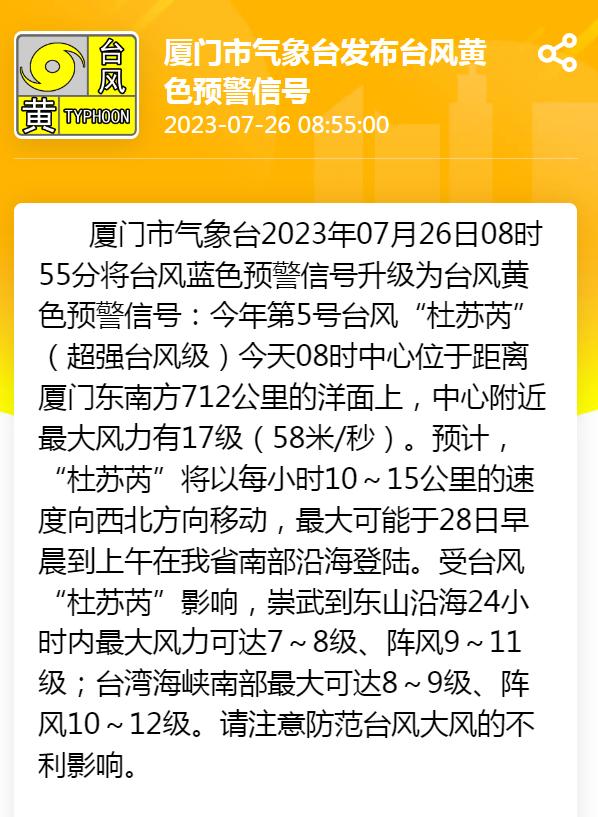
Xiamen Meteorological Observatory upgraded and released

The city’s "Typhoon Warning Level II"

According to the Emergency Plan for Flood Control and Typhoon Prevention in Xiamen

At 9: 20 in our city

Upgrade the typhoon emergency response to level II.

08: 55 a.m.

Issue a yellow warning signal for typhoon

At 06: 00 today

The Central Meteorological Observatory continued to release

Typhoon orange warning, rainstorm blue warning

Understand the latest trends of typhoons

Click to view details ↓↓↓↓

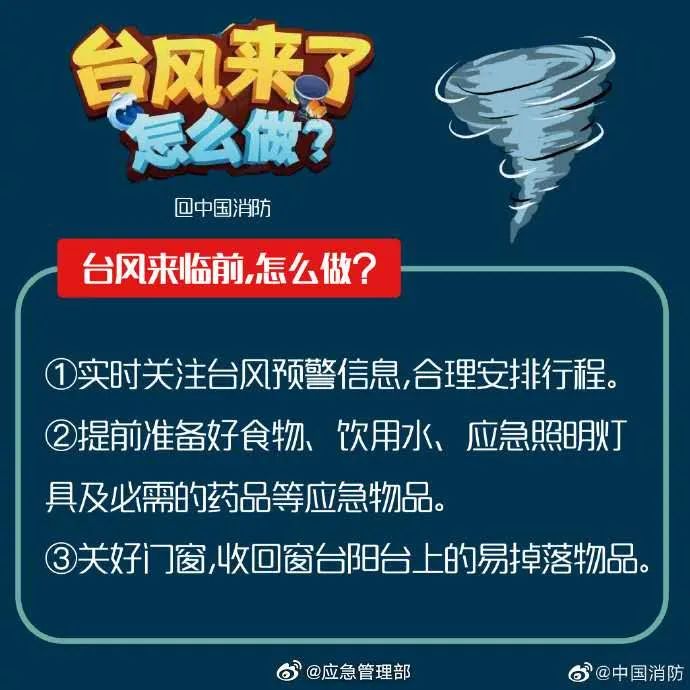
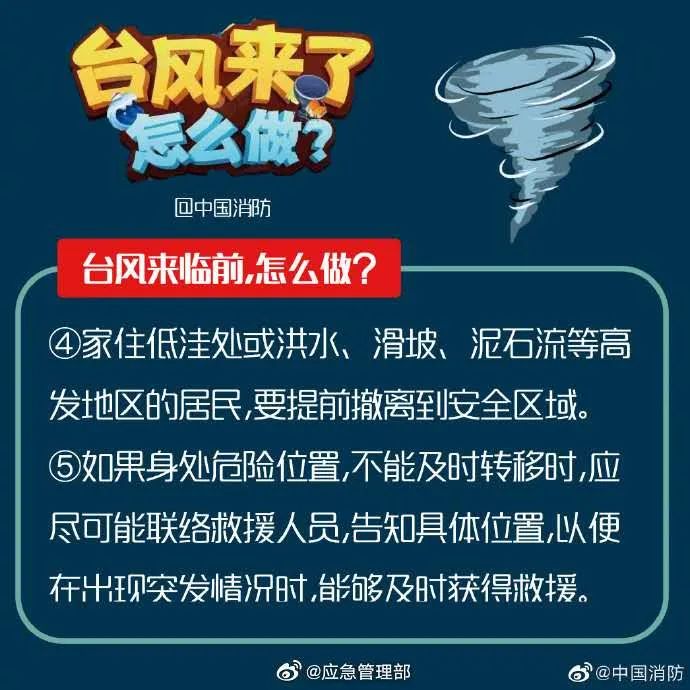
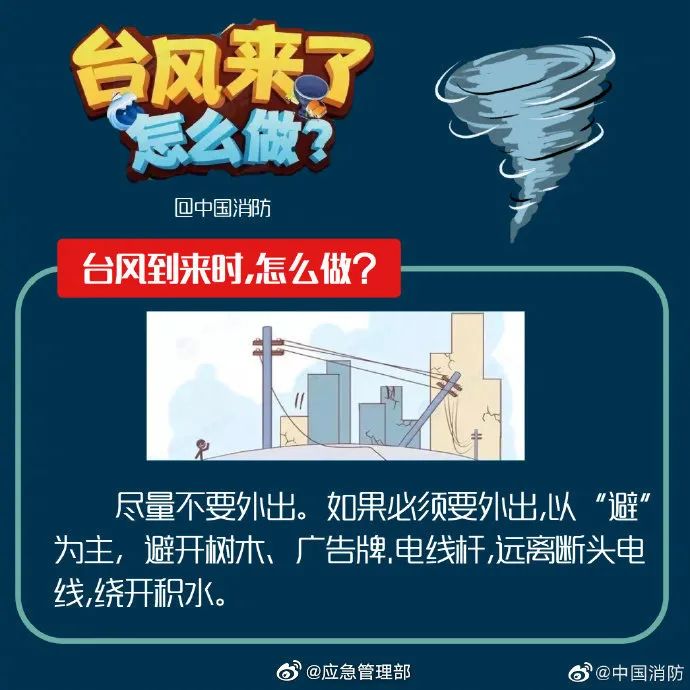
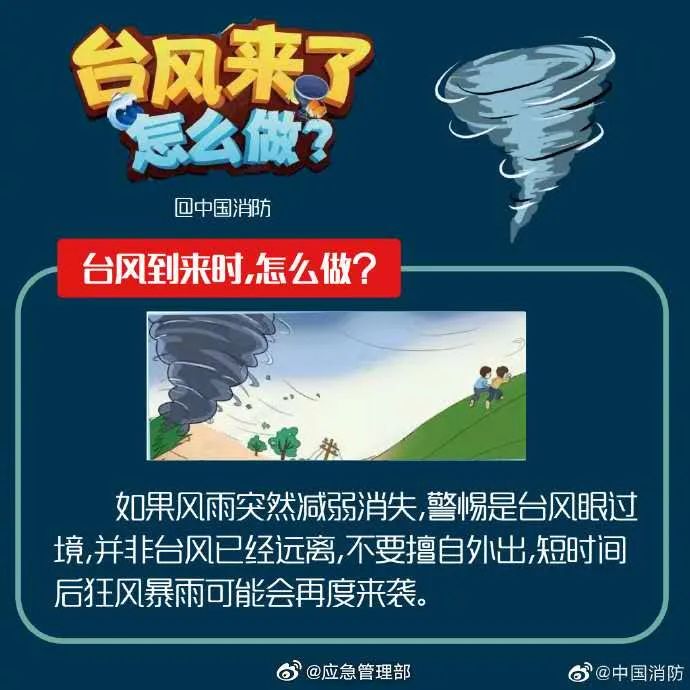
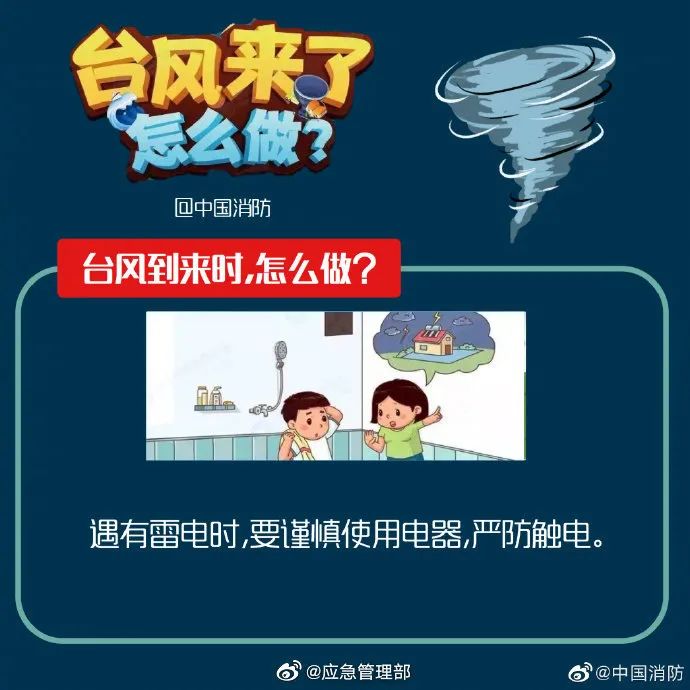
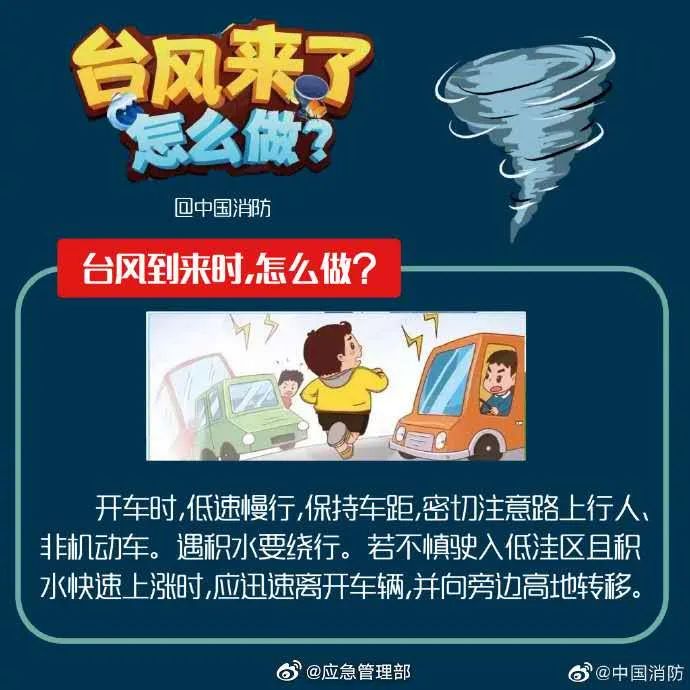
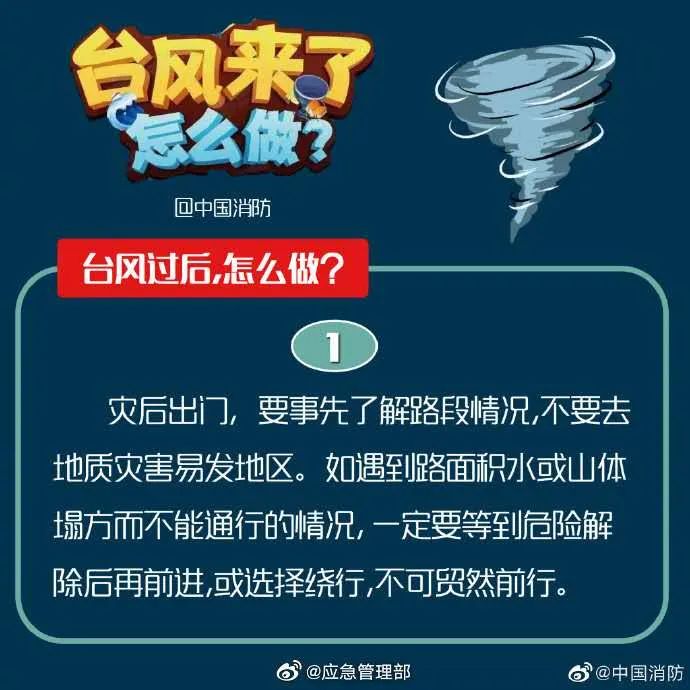
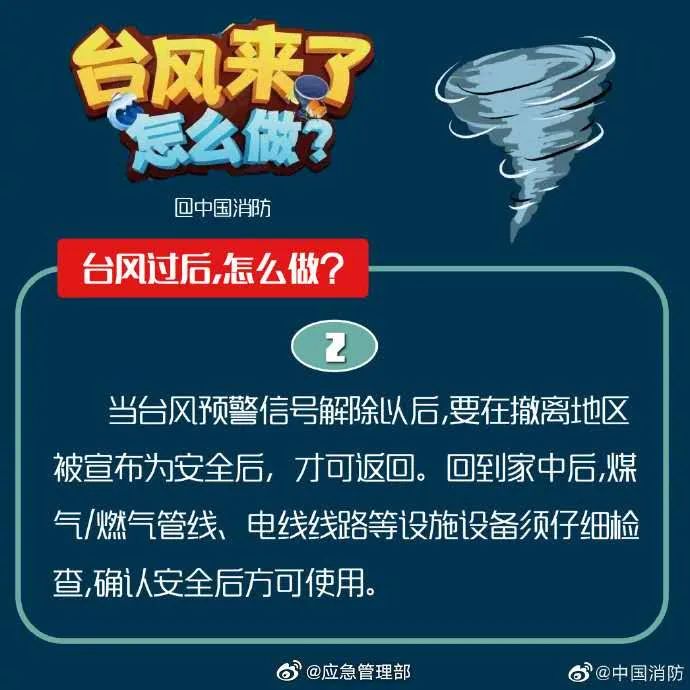
How to prevent before the typhoon comes, what to do when it comes, and what to do afterwards? I hope you don’t need the common sense of typhoon disaster risk prevention, but you must master it! Look at the picture to understand.

Original title: "Typhoon Today’s Path"

Read the original text

Violate the "taboo" of the British royal family? Biden’s actions caused controversy.

  Beijing, July 12 (Xinhua) Comprehensive foreign media reported that a few days ago, US President Biden went to Britain and had a high-profile meeting with King Charles III of England at Windsor Castle. This is the first time that Charles III has met Biden since he was officially crowned King of England in May.

  In order to welcome Biden’s visit, the British royal family held a grand welcoming ceremony. However, some of Biden’s little moves are "out of place" in this solemn and elegant occasion, which has caused controversy.

  At the welcoming ceremony that day, Biden, who was six years older than King Charles III of England, met him and shook hands. Instead of bowing according to tradition, he put his other hand on Charles III’s elbow. In addition, Biden patted Charles III on the back with his hand, which shocked many royal observers.

  It is reported that these actions do not conform to the etiquette rules of the British royal family. Members of the royal family should take the initiative to contact first, otherwise others should not touch members of the royal family.

  On July 10, 2023, local time, US President Biden and King Charles III of England reviewed the honor guard composed of Welsh Guards at Windsor Castle.

  Later, when they reviewed the Welsh Guards lined up in the courtyard of the castle, Biden put his hand on Charles III’s back again.

  During the inspection, Charles III once urged Biden to move on. At that time, Biden was talking to a guard being inspected and ignored it. Charles III seemed unhappy. After Biden walked forward, he snapped at the guard and made a gesture.

  This scene reminded Newsweek of 2018, when President Trump met with the Queen of England, he also stood in front of the Queen, and the Queen had to go around the left and right behind him. At that time, Trump was criticized for not letting the Queen go first according to etiquette. Critics believe that turning your back on the monarch violates the "taboo" of the British royal family.

  The website of the British royal family said that "there is no mandatory code of conduct" when meeting with members of the royal family, but pointed out that "many people want to follow the traditional form", that is, men bow their heads and women curtsy.

  Regarding Biden’s "rudeness", Buckingham Palace later insisted that Charles III "didn’t mind" and that he was "completely at ease" with Biden’s touch. A Buckingham Palace source said, "This is a wonderful symbol of warmth and affection between individuals and countries", and he even said that "contrary to some reports, it is actually the correct etiquette".

  Gardner, head of the Thatcher Freedom Center of the American think tank Heritage Foundation, said that although Americans may not be familiar with the British royal etiquette, it is very important for the US president to abide by some etiquette when tensions between the United States and Britain are intensifying in many fields. Biden’s willingness to give up these etiquette traditions shows that these are not important to him.

  "He is the president of the United States, so he is not an ordinary person. But I think this is Biden’s behavior. He is very rude to Britain, especially on the Northern Ireland issue. " Gardner said, "This deepens Biden’s overall image of not liking Britain, disrespecting Britain and not really obeying rules or etiquette."

  In fact, this is not the first time Biden has caused controversy over etiquette. In 2021, when Biden met with Queen Elizabeth, he was criticized for wearing sunglasses in the first half of the meeting. Grant Harold, former butler of Charles III, said earlier that "face-to-face" eye contact was "very important" when meeting the Queen, and Biden should take off his sunglasses.

Strengthen the systematic, holistic, collaborative and timeliness of legislation

  [In-depth study, publicity and implementation of the spirit of the 20th Party Congress]

  Author: Luo Can (researcher, Institute of Intelligent Justice, Southwest University of Political Science and Law)

  General Secretary of the Supreme Leader emphasized in the Party’s Report to the 20th CPC National Congress that it is necessary to "enhance the systematization, integrity, coordination and timeliness of legislation", which puts forward specific requirements for high-quality legislation. As the primary link of governing the country according to law in an all-round way and building China under the rule of law, legislation plays a key role in leading and promoting law enforcement, fair justice and law-abiding for all people. At present, China has formed a socialist legal system with Chinese characteristics with the Constitution as the core. Since the 18th National Congress of the Communist Party of China, the National People’s Congress and its Standing Committee have made continuous achievements in making laws, amending laws, adopting decisions on legal issues and major issues, and making legislative interpretations. The number of legislations has increased substantially, and the legislative work is undergoing a major shift from "with or without" to "with or without". Systematization, wholeness, coordination and timeliness are clear standards and yardsticks to measure whether legislation is good or not, and are important supporting conditions for promoting scientific legislation, democratic legislation and legislation according to law, and coordinating the establishment, reform, abolition, interpretation and compilation.

  First, strengthen the legislative system. Systematization is an important epistemology and methodology of Marxist philosophy. Systematization requires not only to treat the research problem as a system and analyze the structure and function of the system, but also to analyze the essence and internal relations of things with systematic thinking, so as to grasp the development law of things as a whole and improve the scientificity of analyzing and solving problems. Legislation itself is a system, and it is also a subsystem of the system engineering of rule of law construction. From the external relationship of rule of law, rule of law construction is an important part of building a socialist modern country in an all-round way, which is interrelated and interacted with economy, politics, culture, society, ecology, science and technology, military affairs, diplomacy and other aspects. Therefore, we must look at and promote the legislative work with a universal, comprehensive and systematic view of development and change. The concept of system runs through legislation, which should be positioned from the strategic height of the overall development of the cause of the party and the state, rather than discussing the law on the basis of law. From the top-level design, the socialist legal system with Chinese characteristics should closely follow the characteristics of Chinese modernization, and make an overall layout based on the modernization of huge population, common prosperity of all people, harmony between material civilization and spiritual civilization, harmonious coexistence between man and nature, and peaceful development; The socialist legal system with Chinese characteristics should meet the essential requirements of Chinese modernization.Adhere to the Communist Party of China (CPC)’s leadership, adhere to Socialism with Chinese characteristics, achieve high-quality development, develop people’s democracy in the whole process, enrich people’s spiritual world, achieve common prosperity for all people, promote harmonious coexistence between man and nature, promote the building of a community of human destiny, and create new forms of human civilization, which are highly integrated into legislative purposes and legal principles. For the specific legal problems in reality, we should look at the essence through the phenomenon. From departmental law and single-department law to articles and terminology, we should grasp the relationship between the overall situation and the local situation, macro and micro, and proceed from the overall situation of perfecting the legal system, perfecting the rule of law construction system and promoting the modernization of the national governance system and governance capacity, and systematically think, systematically design, systematically plan and systematically advance.

  Second, strengthen the integrity of legislation. The concept of wholeness emphasizes that any system is an organic whole, and the legal system should be complete and unified. On completeness, it should include at least three aspects: from the perspective of the division of legal system, the socialist legal system with Chinese characteristics takes the Constitution as the core and consists of the Constitution and related laws, civil and commercial law, administrative law, economic law, social law, criminal law, litigation and non-litigation procedure law, international law and other fields, and the legislative content of each field should be complete, leaving no blank for phenomena, behaviors and problems that must be incorporated into legal adjustment; Judging from the rank of effectiveness of the legal system, the legal system of socialism with Chinese characteristics is at the highest legal rank with the Constitution, showing multiple levels of laws, regulations, rules and regulations, and the legislation at each level should perform its duties without being absent. From the broad perspective of the legal system, soft laws such as village rules and regulations, autonomous group rules, trade regulations and customs are indispensable parts of the socialist legal system with Chinese characteristics. We should improve the soft law mechanism to give full play to the important role and unique advantages of soft law in comprehensively promoting the rule of law. Regarding unity, it mainly involves treating and handling conflicts and contradictions in legislation. On the one hand, we should improve the conflicts between departmental laws and different legal levels, and try our best to reduce and avoid the inconsistency and conflict of legal provisions while improving the relevant review and correction mechanism and legal application rules. On the other hand, different legislative documents, especially between different departmental laws, have different legal interests that they focus on.There will be contradictions between legal interests, and we should treat and solve such contradictions dialectically based on the fact that legislation is an organic whole.

  Third, enhance legislative synergy. Synergy refers to the mutual cooperation and functional coupling of various components of the system, which form a pulling effect synchronously to achieve common progress and positive development. The supreme leader’s thought of rule of law pays attention to the important position of collaborative governance in comprehensively governing the country according to law. Legislative synergy is the institutional guarantee for promoting collaborative governance, and it is the rule of law basis for promoting the coordination of various governance measures in policy orientation, mutual promotion in concrete implementation, and complementarity in actual results. Based on the perspective of the integrated construction of a country ruled by law, a government ruled by law and a society ruled by law, legislative synergy should be promoted and realized from many aspects, levels and dimensions. Regarding the coordination between central legislation and local legislation, central legislation should not only fully consider the needs of local legislation, but also prevent the legalization of local protectionism and provide clear guidance and guidance for local legislation; Local legislation should proceed from local reality, improve the level of operability and refinement, and effectively improve the actual effect of central legislation. With regard to regional collaborative legislation, we should gradually build a regional collaborative legal system, clarify the responsibilities of relevant working institutions, improve the guarantee mechanism of collaborative legislation, and provide legal guidance for regional governance and coordinated regional development. Regarding the coordination of different departmental laws, the actual legal phenomena and problems are intertwined, and a legal relationship may enter the adjustment scope of multiple departmental laws. We should pay attention to the study of cross-legal issues and realize the convergence and cooperation of legal systems on the premise of avoiding conflicts. Regarding the coordination of legal powers and responsibilities of state organs, the coordination and cooperation between departments and organs should be clearly guided and stipulated.Really form a joint force that complements each other and promotes each other, and avoid the phenomenon of fighting for power and shifting the blame. With regard to the coordinated promotion of legislative work, the legislative work itself is a huge project that combines the whole with the part and the whole with the focus. On the dynamic level, we should coordinate the promotion of all aspects and progress, and pay attention to the coordinated optimization between legislation and the power of legal interpretation of administrative and judicial organs, and between legislation and traditional culture and moral concepts.

  Fourth, enhance the timeliness of legislation. Timeliness shows that law is a developing rather than a static, open rather than a closed system. The General Secretary of the Supreme Leader stressed: "Legislation actively adapts to the needs of reform, actively plays the role of guiding, promoting, standardizing and guaranteeing reform, so as to ensure that major reforms are based on the law, reform and the rule of law are promoted simultaneously, and the penetration of reform is enhanced." At the historical moment when the whole Party and the people of all ethnic groups in China have embarked on a new journey of building a socialist modern country in an all-round way and marched towards the goal of the second century, legislation should keep pace with the times, closely meet the urgent needs of national governance, meet the growing needs of the people for a better life, update in a timely manner, promote legal reform in the fields of national security, scientific and technological innovation, public health, biological security, ecological civilization and risk prevention, and fill the gaps in the system. In addition to addition, we should also do subtraction. The General Secretary of the Supreme Leader stressed: "The existing laws and regulations that do not meet the requirements of reform should be revised or abolished in time, and some outdated legal provisions should not be allowed to become the stumbling block of reform." In recent years, the number of legislation in China has increased dramatically, and it is also an important task to timely clean up outdated legal normative documents that no longer meet the actual development needs of China.

  High-quality legislation is an inevitable requirement for building a legal system in Socialism with Chinese characteristics and a socialist country ruled by law. "For the country, the concept of customs legislation is the rule, and it is appropriate to examine the state affairs. If you don’t look at the customs of the times and don’t look at the country, then the law will be established and the people will be chaotic, and the drama will be ineffective. " To strengthen the systematization, integrity, coordination and timeliness of legislation, we must proceed from China’s basic national conditions, which can neither be divorced from reality nor conform to the old rules. At the same time, we should also learn from the world’s outstanding achievements in the rule of law civilization. We should take strengthening the systematicness, integrity, coordination and timeliness of our legislation as an important premise, adhere to the principle of taking myself as the mainstay, using it for ourselves, and critically identifying and rationally absorbing it. Only by adhering to the rule of law in Socialism with Chinese characteristics and realizing high-quality legislation on the rule of law can we ensure the good law and good governance in Socialism with Chinese characteristics.

  Guangming Daily (November 17, 2022, 06 edition)

Source: Guangming Net-Guangming Daily

Central enterprises focus on 15 directions to develop strategic emerging industries

  Beijing, 24 July (Reporter Li Xinping) The reporter recently learned that the State-owned Assets Supervision and Administration Commission of the State Council is deploying and promoting the actions of revitalizing the industries of central enterprises and setting sail for future industries, focusing on the direction of 15 key industries such as the new generation of mobile communication, artificial intelligence, biotechnology and new materials, and promoting the central enterprises to accelerate the layout and development of strategic emerging industries.

  The relevant person in charge of the State-owned Assets Supervision and Administration Commission of the State Council said that the State-owned Assets Supervision and Administration Commission of the State Council will base itself on the characteristics of state-owned central enterprises, give full play to the unique advantages of connecting macro-economic and micro-business entities, and come up with a "state-owned central enterprise solution" for the development of strategic emerging industries. Central enterprises should go all out to develop strategic emerging industries, form a systematic layout as soon as possible on the basis of scientific argumentation, adhere to long-term, stable investment, develop, break through and lay out at the same time, strengthen cooperation with enterprises of various ownership in the industrial chain, increase major investment, industrial mergers and acquisitions, technology research and development, standard formulation, etc., and strive to build a number of strategic emerging industrial clusters and industrial leading enterprises with international competitiveness.

The statistical bulletin on the development of transportation industry in 2021 was published.

  In 2021, under the strong leadership of the CPC Central Committee with the Supreme Leader as the core, guided by the Supreme Leader’s Socialism with Chinese characteristics Thought in the New Era, the transportation industry will fully implement the spirit of the 19th National Congress of the Communist Party of China and the previous plenary sessions of the 19th National Congress, follow the deployment of the Central Economic Work Conference and the Government Work Report, adhere to the general tone of steady progress, fully, accurately and comprehensively implement the new development concept, and serve to accelerate the construction of a new development pattern. We made overall plans for epidemic prevention and control and transportation for economic and social development, made great efforts to promote the high-quality development of the industry, accelerated the construction of a strong transportation country, and strived to be a pioneer in China’s modernization, thus achieving a good start in the 14th Five-Year Plan and providing important transportation support for the work of "six stables" and "six guarantees".

  infrastructure

  (1) Railways.

  At the end of the year, the national railway mileage reached 150,000 kilometers, including 40,000 kilometers for high-speed rail. The railway double-track rate is 59.5%, and the electrochemical rate is 73.3%. The national railway network density is 156.7 km/10,000 km2.


  (2) highways.

  At the end of the year, the total mileage of national highways was 5,280,700 kilometers, an increase of 82,600 kilometers over the end of the previous year. The highway density is 55.01km/100km2, an increase of 0.86km/100km2. The highway maintenance mileage is 5,251,600 kilometers, accounting for 99.4% of the total highway mileage.


  And highway density

  At the end of the year, the national highway mileage of Grade IV and above was 5,061,900 kilometers, an increase of 117,400 kilometers over the end of last year, accounting for 95.9% of the total highway mileage, an increase of 0.7 percentage points. Among them, the mileage of grade II and above highways was 723,600 kilometers, an increase of 21,300 kilometers, accounting for 13.7% of the total mileage of highways, an increase of 0.2 percentage points; The expressway mileage was 169,100 kilometers, an increase of 0.81 million kilometers, and the national expressway mileage was 117,000 kilometers, an increase of 0.40 million kilometers.


  At the end of the year, the national highway mileage was 375,400 kilometers, and the provincial highway mileage was 387,500 kilometers. The mileage of rural roads is 4,466,000 kilometers, including 679,500 kilometers of county roads, 1,223,000 kilometers of township roads and 2,563,500 kilometers of village roads.

  At the end of the year, there were 961,100 highway bridges and 73,802,100 linear meters, an increase of 48,400 and 7,516,600 linear meters respectively over the end of last year, including 7,417 extra-large bridges, 13,478,700 linear meters, 134,500 bridges and 37,158,900 linear meters. There are 23,268 highway tunnels and 24,698,900 linear meters, an increase of 1,952 and 2,699,600 linear meters, including 1,599 extra-long tunnels and 7,170,800 linear meters, and 6,211 long tunnels and 10,844,300 linear meters.

  (3) Waterway.

  1. Inland waterway.

  At the end of the year, the navigation mileage of inland waterways nationwide was 127,600 kilometers, 43 kilometers less than the end of the previous year. The navigable mileage of the Grade Channel is 67,200 kilometers, accounting for 52.7% of the total mileage, of which the navigable mileage of the Grade III and above channels is 14,500 kilometers, accounting for 11.4% of the total mileage.

  The navigable mileage of inland waterways at all levels are: 2106 km of first-class waterway, 4069 km of second-class waterway, 8348 km of third-class waterway, 11284 km of fourth-class waterway, 7602 km of fifth-class waterway, 16849 km of sixth-class waterway and 16946 km of seventh-class waterway. The outer waterway is 60,400 kilometers.

  The navigable mileage of inland waterways of each water system is 64,668 kilometers, the Pearl River 16,789 kilometers, the Yellow River 3,533 kilometers, the Heilongjiang River 8,211 kilometers, the Beijing-Hangzhou Canal 1,423 kilometers, the Minjiang River 1,973 kilometers and the Huaihe River 17,500 kilometers respectively.

  2. Port.

  At the end of the year, there were 20,867 berths for port production in China, 1,275 fewer than the end of last year. Among them, there are 5,419 berths for production in coastal ports, a decrease of 42, and 15,448 berths for production in inland ports, a decrease of 1,233.

  At the end of the year, there were 2,659 berths of 10,000-ton and above ports nationwide, 67 more than the end of last year. From the distribution structure, there are 2,207 berths of 10,000-ton and above in coastal ports, an increase of 69 berths, and 452 berths of 10,000-ton and above in inland ports, a decrease of 2 berths. From the perspective of use structure, there are 1,427 specialized berths of 10,000-ton and above, with an increase of 56 berths, 596 berths of 10,000-ton and above for general bulk cargo, with an increase of 4 berths, and 421 berths of general general groceries with an increase of 6 berths.

  Table 1 Number of berths of 10,000-ton and above ports in China by the end of 2021

  Unit: one


  (by main use)

  Unit: one


  At the end of the year, 248 civil air transport airports were certified, 7 more than the end of last year, including 248 airports with scheduled flights and 244 cities (regions) with scheduled flights.

  There were 96 airports with annual passenger throughput of more than 1 million passengers, an increase of 11 over the previous year, including 29 airports with annual passenger throughput of more than 10 million passengers, an increase of 2. There were 61 airports with cargo and mail throughput of more than 10,000 tons, an increase of 2 airports.

  Transportation equipment

  (1) Railways.

  At the end of the year, there were 22,000 railway locomotives in China, including 8,000 diesel locomotives and 14,000 electric locomotives. There are 78,000 railway passenger cars, including 4153 standard sets and 33,221 emus. It has 966,000 railway wagons.

  (2) highways.

  At the end of the year, there were 12,319,600 road vehicles in China, an increase of 5.2% over the end of last year. In terms of structure, there are 587,000 passenger cars and 17,510,300 passenger seats, down by 4.2% and 4.9% respectively; There are 11,732,600 trucks and 170,995,000 tons, up by 5.7% and 8.3% respectively, among which 4,069,400 ordinary trucks and 49,234,300 tons are down by 1.7% and up by 5.6% respectively, and 603,900 special trucks and 7,187,600 tons are up by 19.2% and 29.2% respectively.


  (3) Waterway.

  At the end of the year, there were 125,900 water transport vessels in China, down 0.7% from the end of last year, of which the net deadweight was 284,326,300 tons, up 5.1%, the passenger capacity was 857,800 seats, down 0.3%, and the container capacity was 2,884,300 TEUs, down 1.6%.


  Table 3 Composition of national water transport vessels at the end of 2021

  (by navigation area)


  At the end of the year, there were 709,400 urban public buses and trams in China, up 0.7% from the end of last year, of which 419,500 were pure electric vehicles, up 10.8%, accounting for 59.1% of the total urban public buses and trams, up 5.4 percentage points. There are 57,300 vehicles associated with urban rail transit, an increase of 15.9%. There were 1,391,300 cruise taxis, down 0.2%. There are 196 urban passenger ferry vessels, an increase of 1.0%.


  Table 4 National Urban Passenger Transport Equipment at the End of 2016-2021


  In 2001, the commercial passenger traffic was 8.303 billion, down by 14.1% over the previous year, and the passenger turnover was 1,975.815 billion person-kilometers, up by 2.6%. The commercial freight volume was 52.16 billion tons, up by 12.3%, and the cargo turnover volume was 21,818.132 billion tons kilometers, up by 10.9%.


  (1) Railways.

  In the whole year, the number of passengers sent was 2.612 billion, up by 18.5% over the previous year, and the passenger turnover was 956.781 billion person-kilometers, up by 15.7%.

  In 2001, the total delivery volume of goods was 4.774 billion tons, up 4.9% over the previous year, and the total turnover volume of goods was 3,323.800 billion tons kilometers, up 8.9%.

  (2) highways.

  In the whole year, the commercial passenger traffic was 5.087 billion, down by 26.2% compared with the previous year, and the passenger turnover was 362.754 billion person-kilometers, down by 21.8%.

  In the whole year, the commercial freight volume was 39.139 billion tons, up by 14.2% over the previous year, and the cargo turnover volume was 6,908.765 billion tons kilometers, up by 14.8%.

  The annual average traffic volume of motor vehicles was 14,993 vehicles/day, an increase of 4.9% over the previous year, and the annual average traffic volume was 3,486.92 million vehicle kilometers/day, an increase of 3.6%.

  (3) Waterway.

  In 2001, the commercial passenger traffic reached 163 million passengers, up 9.0% over the previous year, and the passenger turnover reached 3.311 billion person-kilometers, up 0.4%.

  In the whole year, the commercial freight volume was 8.24 billion tons, up by 8.2% over the previous year, and the cargo turnover volume was 11,557.751 billion tons kilometers, up by 9.2%. Among them, the inland river freight volume was 4.189 billion tons, up 9.8%, and the inland river freight turnover was 1,773.599 billion tons kilometers, up 11.3%. The volume of marine cargo was 4.051 billion tons, up 6.6%, and the turnover of marine cargo was 9,784.151 billion tons kilometers, up 8.8%.

  In 2001, the national ports handled 47.7364 million passengers, an increase of 8.0% over the previous year. Among them, the number of inland ports was 1,218,700, an increase of 63.4%, and the number of coastal ports was 46,517,700, an increase of 7.1%.

  In 2001, the cargo throughput of ports nationwide reached 15.545 billion tons, an increase of 6.8% over the previous year. Among them, inland ports completed 5.573 billion tons, up 9.9%, and coastal ports completed 9.973 billion tons, up 5.2%. The container combined transport volume of molten iron was 7.54 million TEU, an increase of 9.8%.

  Table 5 Domestic and Foreign Trade and Key Cargo Throughput of National Ports in 2021


  In 2001, the passenger traffic was 441 million, up 5.5% over the previous year, and the passenger turnover was 652.968 billion person-kilometers, up 3.5%. Passenger traffic on domestic routes was 439 million, up by 7.6% over the previous year, of which 592,500 were on Hong Kong, Macao and Taiwan routes, down by 38.4%, and 1,477,200 were on international routes, down by 84.6%.

  In 2001, the cargo and mail transportation volume was 7,318,400 tons, up by 8.2% over the previous year, and the cargo and mail turnover volume was 27,816 million tons kilometers, up by 15.8%.

  In the whole year, the passenger throughput of civil aviation transportation airports was 907 million, up 5.9% over the previous year, and the cargo and mail throughput was 17.828 million tons, up 10.9%.

  (5) postal services.

  In the whole year, the total business volume of the postal industry was 1,369.83 billion yuan, an increase of 25.1% over the previous year.

  In 2001, postal mail business was 1.09 billion, down by 23.3% compared with the previous year, parcel business was 18.229 million, down by 10.2%, newspaper business was 16.39 billion, down by 0.9%, magazine business was 690 million, down by 3.6%, and remittance business was 6.46 million, down by 32.8%.

  The express delivery business volume was 108.30 billion pieces, an increase of 29.9% over the previous year. The income from the express delivery business was 1,033.23 billion yuan, up by 17.5%, accounting for 81.7% of the postal business income, up by 2.0 percentage points.

  (6) Urban passenger transport.

  At the end of the year, there were 75,770 urban bus and tram lines in China, an increase of 5,127 lines over the end of last year, with a total length of 1,593,800 kilometers, an increase of 111,700 kilometers, including 18,263.8 kilometers of bus lanes, an increase of 1,712.2 kilometers. There are 275 urban rail transit lines, an increase of 49 lines, with an operating mileage of 8,735.6 kilometers and an increase of 1,380.9 kilometers, including 223 subway lines and 7 light rail lines and 262.9 kilometers. There are 84 operating routes for urban passenger ferries, with an increase of 1, and the total length of operating routes is 376.3 kilometers, with an increase of 52.9 kilometers.

  In 2001, the urban passenger traffic reached 99.384 billion, an increase of 14.0% over the previous year. Among them, the passenger traffic of public buses and trams was 48.916 billion, with an operating mileage of 33.527 billion kilometers, up by 10.6% and 10.7% respectively; that of urban rail transit was 23.727 billion, up by 34.9%; that of cruise taxis was 26.690 billion, up by 5.4%; and that of urban passenger ferries was 51 million, up by 30.5%.


  Traffic fixed assets investment

  In the whole year, the investment in transportation fixed assets was 3,622 billion yuan, an increase of 4.1% over the previous year.


  (1) Railways.

  The investment in railway fixed assets was 748.9 billion yuan.

  (2) highways and waterways.

  The investment in fixed assets of highways and waterways was 2,750.8 billion yuan, an increase of 6.3% over the previous year.

  1. Highway.

  The investment in highway fixed assets was 2,599.5 billion yuan, an increase of 6.0% over the previous year. Among them, expressways reached 1,515.1 billion yuan, up by 12.4%, ordinary national highways reached 560.9 billion yuan, up by 5.9%, and rural highways reached 409.5 billion yuan, down by 12.9%.

  In the whole year, 832 poverty-stricken counties in China completed 758.2 billion yuan of investment in highway fixed assets.

  2. Waterway.

  In 2001, the investment in waterway fixed assets was 151.3 billion yuan, up by 11.4% over the previous year. Among them, inland river construction was 74.3 billion yuan, up 5.5%, and coastal construction was 72.3 billion yuan, up 15.4%.

  (3) Civil aviation.

  The investment in fixed assets of civil aviation was 122.2 billion yuan, an increase of 13.0% over the previous year.

  safe production

  (1) Railways.

  In the whole year, there were no particularly serious and serious railway traffic accidents, but one major accident occurred, 12 fewer than the previous year. The number of deaths in railway traffic accidents decreased by 23.1% compared with the previous year.

  (2) highways and waterways.

  In the whole year, there were 129 water traffic accidents (grade accidents) of transport ships, down 6.5% from the previous year, with 153 people dead and missing, down 21.9%, and 46 sunken ships, down 39.5%. Maritime search and rescue centers at all levels in China organized and coordinated 1990 search and rescue operations, and successfully searched and rescued 1171 Chinese and foreign ships in distress and 13928 Chinese and foreign people in distress in China’s search and rescue responsibility area.

  No serious accidents occurred in the field of highway and waterway engineering construction in the whole year, with 64 production safety accidents and 90 deaths, down by 13.5% and 4.3% respectively over the previous year.

  In the whole year, there were 6 general accidents and 6 deaths in port operations, a decrease of 1 and 1 respectively over the previous year. No major or above accidents occurred.

  (3) Civil aviation.

  In the whole year, there were 16 general aviation accidents in China, 2 fewer than the previous year, with 18 deaths and 5 more.

  Scientific and technological innovation and the construction of talent team

  In the whole year, 15 projects in the transportation field won the National Science and Technology Award in 2020, including 10 in the railway industry and 3 in the highway industry. A total of 66 patents won the 22nd China Patent Award, including 35 in railway industry, 19 in highway industry and 7 in water transportation industry. A total of 312 scientific and technological achievements were selected into the 2021 database of major scientific and technological innovations in transportation, and 248 scientific and technological achievements entered the database of major scientific and technological innovations in railways.

  At the end of the year, there were 56 industry key laboratories, 86 industry R&D centers, 19 collaborative innovation platforms, 13 field scientific observation and research bases, and 10 national transportation science popularization bases.

  In the whole year, the transportation industry issued 218 national and industry standards.

  In the whole year, 10 young and middle-aged leading talents in science and technology, 7 innovation teams in key fields and 4 innovative talents training demonstration bases were selected for the 2021 promotion plan of scientific and technological innovative talents in transportation industry. Two people won the national special support plan for high-level talents, three people won the title of "national technical expert" and 245 people won the title of "national transportation technical expert".

  Notes:

  1. The statistical data of Hongkong, Macao Special Administrative Region and Taiwan Province are not included in this bulletin.

  2. According to the National Highway Network Planning (2013— In 2030), combined with the adjustment of road networks in various provinces (autonomous regions and municipalities), the statistical caliber of mileage of China Road, Provincial Road, County Road, Township Road and Village Road was partially adjusted.

  3. In the communique, the number of commercial passenger traffic is the number of completed railways, highways, waterways and civil aviation, excluding urban passenger traffic; The volume of commercial cargo transportation is the number of railway, highway, waterway and civil aviation, excluding pipeline data. Since 2021, the statistical method of road freight volume has been adjusted from "calculation by the competent department of the industry" to "comprehensive investigation of enterprises under the regulations+fluctuation calculation of households under the regulations". Since 2021, the statistical method of waterway passenger traffic has fully adopted the enterprise network direct report.

  4. Among the postal related indicators, the total business volume of the postal industry in 2021 is calculated at the constant unit price in 2020, and the total business volume of the postal industry in 2020 is calculated at the constant unit price in 2010. The absolute amount of year-on-year increase or decrease cannot be calculated, and the percentage of year-on-year increase or decrease is calculated at a comparable caliber.


Mud goo goo, Qi Diao dressing box all appeared, and the cultural tourism Expo showed its regional characteristics along the yellow hand.

Text/film reporter Shi Wenjing
From September 15th to 19th, the 3rd China International Cultural Tourism Expo and the 1st Chinese Traditional Craft Conference were held in Jinan, with the theme of "Exposing the Handmade Cultural Tourism Festival in China". Among the 11 offline exhibition areas, 7 exhibition areas were specially tailored for the handicraft industry, and more than 2,700 exhibitors from various exhibition halls such as Handmade in China, Handmade along the Yellow River, Handmade in Canal, Handmade in International and Handmade in Shandong brought a feast.
In the hand-made exhibition hall along the Yellow River and the hand-made canal, cultural elements of human civilization such as Dunhuang, Liangzhu and Longmen Grottoes are on the scene, and all kinds of traditional intangible cultural heritage and cultural and creative products are loved by visitors.
The Yellow River flows from west to east, and the natural scenery and humanistic feelings are intertwined, forming a unique culture. This year’s Cultural Tourism Expo specially set up a hand-made exhibition area along the Yellow River, and a variety of non-legacy projects, cultural and creative products and handmade products with regional characteristics along the Yellow River all appeared. Take advantage of the beautiful Yellow River in an exhibition. Along the Yellow Handmade Exhibition Area, exhibitors from Qinghai, Gansu, Sichuan, Shaanxi, Shanxi, Henan, Shandong and other places brought hand-made fine products with solitary regional characteristics, and Ningxia Babao Tea, Henan Clay Sculpture, Twisted Tangka and Jiangzhou Chengniyan attracted attention.
In the Henan booth, the traditional non-legacy mud from Xunxian County, Hebi City attracts attention with its unique shape. In the works such as Swallow, Lion, Monkey, Rabbit, Life-saving Zodiac, The Journey to the West’s Master and Apprentice, and "Immediately Seal the Hou", all the muddy goo goo characters with different shapes and rich meanings come from non-genetic inheritors. These works are colorful and full of regional characteristics and local flavor. Wang Hongrui, executive director and non-genetic inheritor of the Mud Goo Research Institute in Xunxian County, Hebi City, told the reporter that Mud Goo is a common name for clay figurines in Xunxian County, because every work can blow out a sound, which is vividly called "Goo Goo".
At present, the non-genetic inheritors of Mud Goo Goo have presented this folk craft in a more diversified and modern way. Mud Goo Goo has been integrated with traditional non-legacy teaching and handcrafting, and the works with more fashionable shapes have also been liked by more and more young people. Mud goo goo is made of Yellow River mud. The unique toughness and delicacy of Yellow River mud make hand-made mud goo goo unique in beauty.
In the Shaanxi exhibition area, the creative products and crafts with the parrot-patterned lifting beam jar, double-bee-group flower hollowed-out silver sachet and grape flower-and-bird silver sachet as the creative source are dazzling. Gu Xuliang, general manager of Xi ‘an Ninth Symbol, told the reporter that many works of Xi ‘an Wenchuang exhibited this time were inspired by national treasures, and modern needs were integrated with retro craftsmanship, striving to reproduce the ancient charm of Han and Tang Dynasties. It is worth mentioning that many products in the exhibition area are handmade by craftsmen, which highlights the unique charm of hand-made besides fitting the theme of the Yellow Exhibition Area.
Handmade products in booths such as Qinghai, Gansu and Shanxi are also full of highlights. Thangka series works of activated carbon cloisonne in Qinghai Pavilion not only have the characteristics of traditional crafts, but also have the practical function of cleaning air. Rare products with a long history of making inkstone in Jiangzhou, Shanxi Province are rare. Qinghai cowhide painting takes cowhide as paper, which "condenses" the vast grassland customs and shows the charm of unique handicrafts; Ningxia non-legacy eight-treasure tea wafts out bursts of fragrance; Gansu pyrography gourd is painted with traces left on the surface of gourd by iron, and pyrography and gourd are integrated; Qi Diao products in Tianshui, Gansu Province have diverse themes and beautiful colors, and sculptures and paintings are integrated into one, full of auspicious meanings … Handmade products of Dunhuang elements in the whole exhibition area are also piled up to release brilliance, and Dunhuang flying elements are used in daily life products, showing the beauty of going abroad.
Visitors are visiting the exhibition area along the Yellow River, just like feeling the beauty of customs and regional characteristics along the Yellow River and the Millennium agitation of history and culture. You can come and meet along the theme exhibition area of Huangshou, and go to a cultural journey of ancient and modern integration.
News clue reporting channel: download the "Qilu Yidian" APP in the application market, or search for the WeChat applet "Qilu Yidian", and 600 reporters in the province will wait for you to report online!
Reporting/feedback

[Local Evaluation Line] Litchi Online Evaluation: Implement closed-loop management to prevent overseas input.

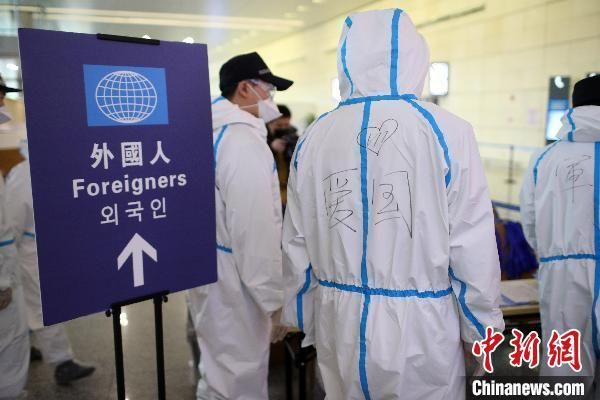
  At present, the situation of national epidemic prevention and control continues to improve, and the situation of accelerating the recovery of production and living order has been continuously consolidated and expanded, and the overall promotion of epidemic prevention and control and economic and social development has achieved positive results. At the same time, however, it must be noted that the spread of overseas epidemic situations has brought new challenges to the prevention and control of epidemic situations in China. Facing the new challenges, the General Secretary of the Supreme Leader pointed out at the Standing Committee of the Political Bureau of the Communist Party of China Central Committee meeting of the Communist Party of China that it is necessary to implement the key tasks of foreign defense input, improve the mechanisms of data sharing, information notification and entry personnel verification, and form a closed loop among air transport, port quarantine, destination delivery and community prevention and control.

  The prevention and control of epidemic situation in COVID-19 is a big test of China’s governance system and governance capacity. In the "first half" of the national examination, China took the most comprehensive, strict and thorough prevention and control measures, basically curbed the spread of the virus and achieved phased results. At present, when entering the "second half" of the big exam and coping with the new challenges of overseas case input, all localities must resolutely implement the spirit of the speech of the Supreme Leader General Secretary, and make precise policies and create a closed loop from the aspects of management subject, management process, management tools and management cycle to prevent overseas input.

  From the management subject, the responsibilities of aviation, ports and communities should be compacted."Air transport, port quarantine, destination delivery and community prevention and control should form a closed loop." General Secretary of the Supreme Leader made clear the responsibility for closed-loop management. It is not difficult to see from the trajectory of the immigrants that the main bodies such as airlines, ports of entry, domestic transportation units and destination communities are all the main bodies that the returnees will inevitably come into contact with. Whether these main units are responsible or not directly affects the effectiveness of external defense input. To consolidate the hard-won domestic prevention and control achievements, all main units must recognize the new challenges brought by the spread of overseas epidemic, pay attention to the new risks of virus transmission brought by entry personnel, always tighten the string of prevention and control, take the initiative and act positively, and earnestly fulfill the responsibility of defending the soil.

  From the management process, strictly control the process to prevent "breakpoints".COVID-19 virus is "cunning". A slight negligence in the prevention and control process will give the virus an opportunity to spread freely. To carry out the prevention and control of entry personnel, it is necessary to strictly control the process, and take good care of every pass such as data sharing, information notification, entry personnel verification and transportation, isolated observation and patient treatment. It is necessary to advance the gateway, strengthen international cooperation in epidemic prevention and control, work closely with the World Health Organization, strengthen the analysis and prediction of global epidemic changes, and improve prevention and control strategies and policy measures to deal with imported risks. It is necessary to improve the immigration control mechanism, refine the "point-to-point, one-stop" and other aspects of control measures, strengthen the convergence of customs, and ensure that there is no "breakpoint".

  From the management tools, make good use of digital technology.In the face of the epidemic, let big data "run more roads" and the virus can "get nowhere". Since the outbreak, digital technology has played an important role in tracing the whereabouts of passengers, testing the health of residents, helping to resume work and production, and ensuring home life. To create a closed loop and guard against input, digital technology cannot be absent. It is necessary to use digital technology to strengthen international cooperation and accurately grasp the health status of immigrants; Grasp the flow status and real-time demand of immigrants through the big data platform; Use information technology such as "health code" to dynamically monitor the health information of entry personnel; Through the "cloud platform" to carry out mental health counseling, improve the consciousness of entry personnel to cooperate with prevention and control.

  From the management cycle, strengthen post-event reflection and enhance closed-loop efficiency.To prevent foreign imports and strengthen epidemic prevention and control, a lot of preliminary work has been carried out in various places, and some problems have also been found. For example, some immigrants are lucky, or falsely report or conceal health information, or do not cooperate with body temperature monitoring, home isolation, or deliberately conceal the incidence and the history of living abroad, which have greatly hindered and harmed the epidemic prevention and control work. To implement closed-loop management, all localities should not only take responsibility, but also be good at reflection, adhere to the problem orientation, find out the shortcomings and rectification direction from the problems, constantly strengthen the legal support for epidemic prevention and control, increase publicity and education on prevention and control knowledge and requirements, strengthen the implementation of prevention and control measures, increase the cost of illegal activities, and effectively enhance the efficiency of closed-loop management.

  If you are cautious to the end, you will never fail. All responsible subjects should not relax, pay close attention to the prevention and control of entry personnel, implement the strictest closed-loop management of "from cabin door to home", keep the hard-won epidemic prevention and control in a good situation, and completely win this war epidemic. (Hu Lu)