[CCTV Review] Abe trotted all the way to see what cards Putin and Russia were playing behind?
On the 15th, Japanese Foreign Minister kishida fumio held talks with visiting Russian Foreign Minister Lavrov in Tokyo. The two sides reached a consensus on starting negotiations on a peace treaty between the two countries as soon as possible after Japanese Prime Minister Shinzo Abe’s recent visit to Russia. According to Japanese government sources, Abe will hold an informal summit meeting with Russian President Vladimir Putin in the southern Russian city of Sochi, which is expected in early May.
You must remember the photo of Abe trotting to shake hands with Putin at the UN headquarters last September — —

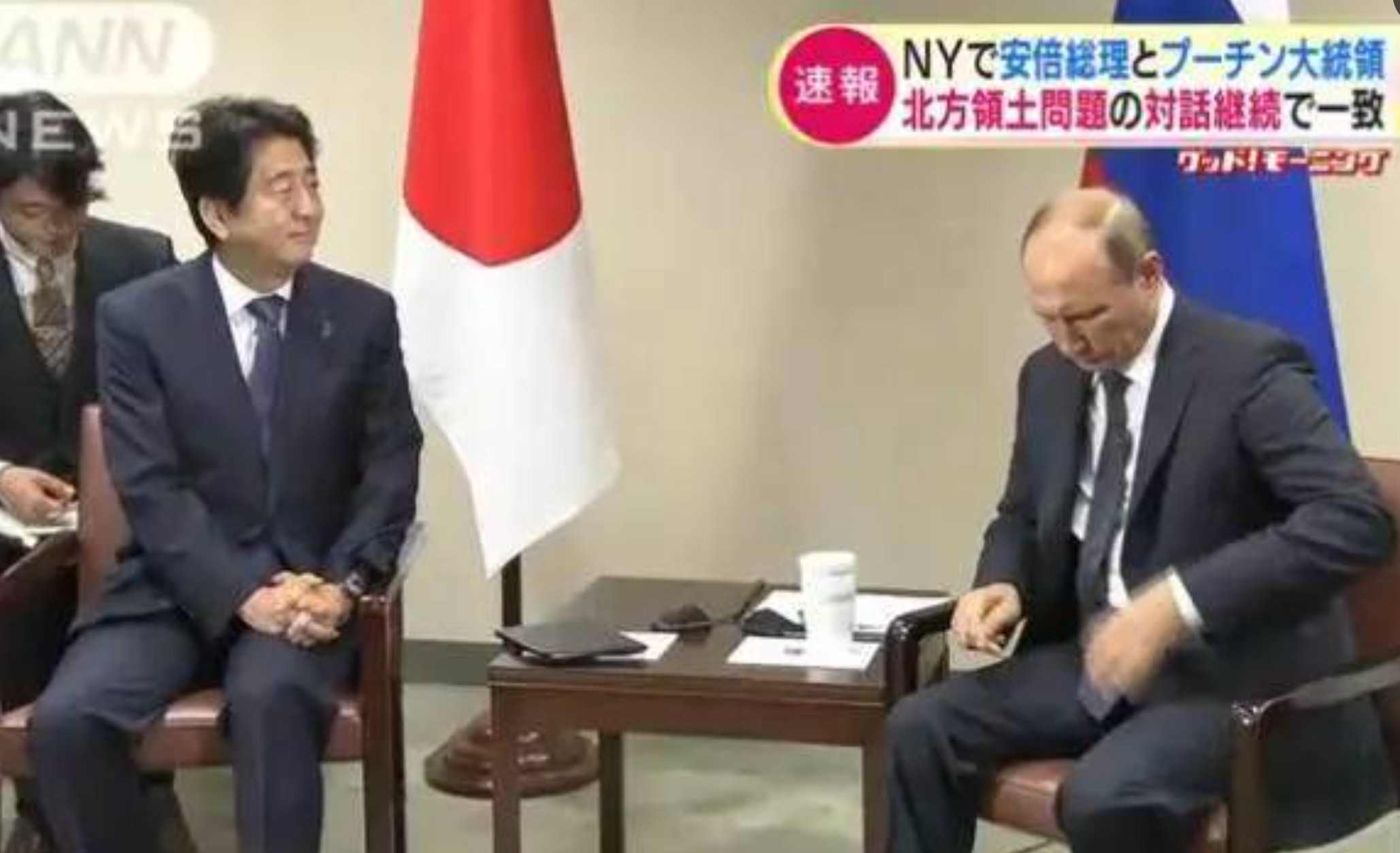
This clip has been reprinted by the world’s major media, and to some extent, it also reflects the reality of current Japan-Russia relations.
In January this year, Abe expressed his desire to hold talks with Putin at the first press conference of the New Year. Abe is anxious to see Putin. What is the plan behind it?
The core goal of doing everything possible to meet is not "diplomacy."
The core goal of Shinzo Abe’s meeting with Putin is not "diplomacy".But in "internal affairs" — — The core political issue in Japan this year is "election"On the one hand, it refers to the Senate election scheduled for July: Abe may dissolve the House of Representatives in advance and hold the House of Representatives election on the same day as the Senate election (that is, the "general election"). If Abe’s Liberal Democratic Party wins again in this general election, its ruling party status can continue until 2020. If the ruling Coalition obtains a two-thirds majority in the elections of the Senate and the House of Representatives, it will meet the legal threshold for starting the constitutional amendment process, and Abe can start the constitutional amendment process in 2017 as expected.
Before such an important election, the core goal of all Abe’s diplomatic actions was only one — — Raise the cabinet support rate. To this end, at the G7 Summit scheduled to be held in Japan in late May, Abe has arranged many "programs" to show his diplomatic "success". The important content is that US President Barack Obama may visit Hiroshima, Japan during the summit, and "comfort" flowers to the victims of the atomic bombing in Hiroshima. During the just-concluded G7 foreign ministers’ meeting, US Secretary of State Kerry visited Hiroshima and said that he would recommend Obama to visit. If this matter is successful, it will be a major event in US-Japan relations and will become an important diplomatic achievement of Abe.
After the breakthrough in Japan-US relations, if Japan-Russia relations can also make a breakthrough, it will undoubtedly add points to Abe. This is why Abe must meet with Putin.If the two meet, Abe is expected to make achievements in Japan-US relations and Japan-Russia relations at the same time, which is bound to be beneficial to the LDP’s election in summer.
In view of the above background, it can be seen that the purpose of Abe’s visit to Russia is to show the "recovery" of Japan-Russia relations to a certain extent, and take this as his diplomatic achievements.
So, has Japan-Russia relations really picked up?
What has Abe experienced in Japan-Russia relations for more than three years?
In fact, since Abe became Japanese Prime Minister again in 2012, he has been trying to improve diplomatic relations with Russia. However, the facts are unpredictable. What happened between Japan and Russia in the past three years?
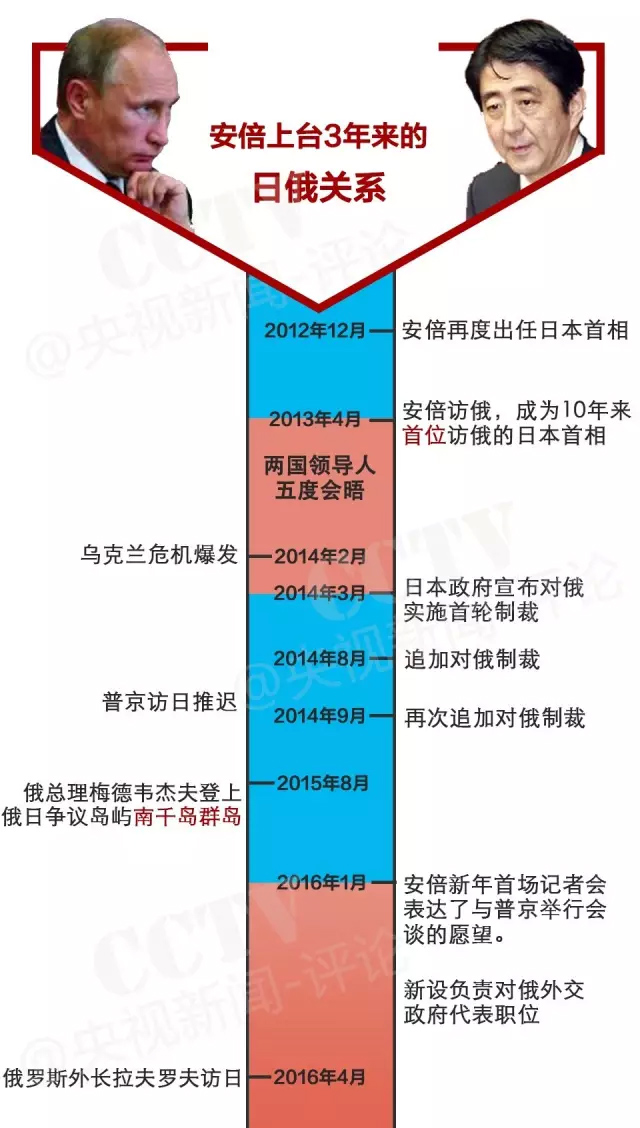
Has Japan-Russia relations "warmed up"? There is still no obvious improvement!
If we compare Japan-Russia relations after the turmoil in eastern Ukraine in 2014, the current relations between the two countries can indeed be regarded as "warming up". After all, Japan had participated in many sanctions against Russia before, and the relationship between the two countries was once deadlocked.However, from the long-term comparison of the past years, Japan-Russia bilateral relations can only be said to be "eased", and there is still no obvious improvement..
Such ups and downs are not uncommon in Russian-Japanese relations and Soviet-Japanese relations in the past decades. Even if the leaders of the two sides can meet, the long-standing problem in bilateral relations — — The ownership of Russia’s South Kuril Islands (called "northern territory" by Japan) is still difficult to solve.I’m afraid it’s hard to improve the quality of bilateral relations..
It is unlikely that a peace treaty will be concluded until the territorial issue is "discussed"
According to the news released by the Japanese side, after the meeting between Abe and Putin, the two countries will explore opening negotiations on concluding a peace treaty as soon as possible. But,The practice of the past decades has proved that even if the two countries start negotiations, it is difficult to talk about the territorial issue.— — For Russia, the territorial issue has always been a top priority, and it is probably not easy for Russia to completely withdraw from the South Kuril Islands, which is of great strategic importance. For Japan, the issue of "northern territory" has become a "politically correct" issue. Even if half of the disputed territory can be taken back in the negotiations, it may not be regarded as "achievement" by the people.
Therefore, the positions of the two sides on the territorial issue are very different and it is difficult to reconcile. Not to mention, Japan’s most important ally — — The United States does not want to see Japan-Russia relations too close, so it is likely to put pressure on Japanese diplomacy at a critical moment. So,It is very unlikely that Japan and Russia will conclude a peace treaty in a short time..
For China, the slight warming of Japan-Russia relations will not have an immediate geographical impact. However, Abe’s frequent diplomatic actions are indeed likely to win "capital" for his domestic support rate, thus expanding his victory in the summer election.If Japan’s ruling coalition led by Abe succeeds in winning two-thirds of the advantages of the Senate and the House of Representatives this summer, it is likely to start the constitutional amendment process as scheduled next year, and may play a tougher game against China. This incipient political prospect is what China and other East Asian neighbors should pay more attention to.
Wen Yi CCTV Review Special Contributor Liu Hua
Producer of this issue/Editor-in-Chief Yang Jihong/Jie Chen
Editor/Wenya Wang Shuo Li Tingting