What are the reasons for the successive increase in vegetable prices in various places? When will the price be reduced? Expert analysis
Xinhua News Agency, Beijing, October 29th Question: Why did the price of vegetables rise? When will it land?
Xinhua News Agency reporters Wang Yuxiao, Yu Wenjing and An Bei.
"Spinach is more than ten yuan a catty, and it is expensive to catch up with meat!" At the entrance of a fresh supermarket in Xicheng District, Beijing, Aunt Wu repeatedly lamented.
Since October, the price of vegetables in many places in the country has continued to rise, and the value of individual vegetable varieties has even doubled. According to the monitoring of the Ministry of Commerce, the average wholesale price of 30 kinds of vegetables in the week from October 18th to 24th was 5.62 yuan per kilogram, up by 12% over the previous week, among which the wholesale prices of broccoli, eggplant and cauliflower increased by 26.8%, 24.7% and 24.6% respectively.
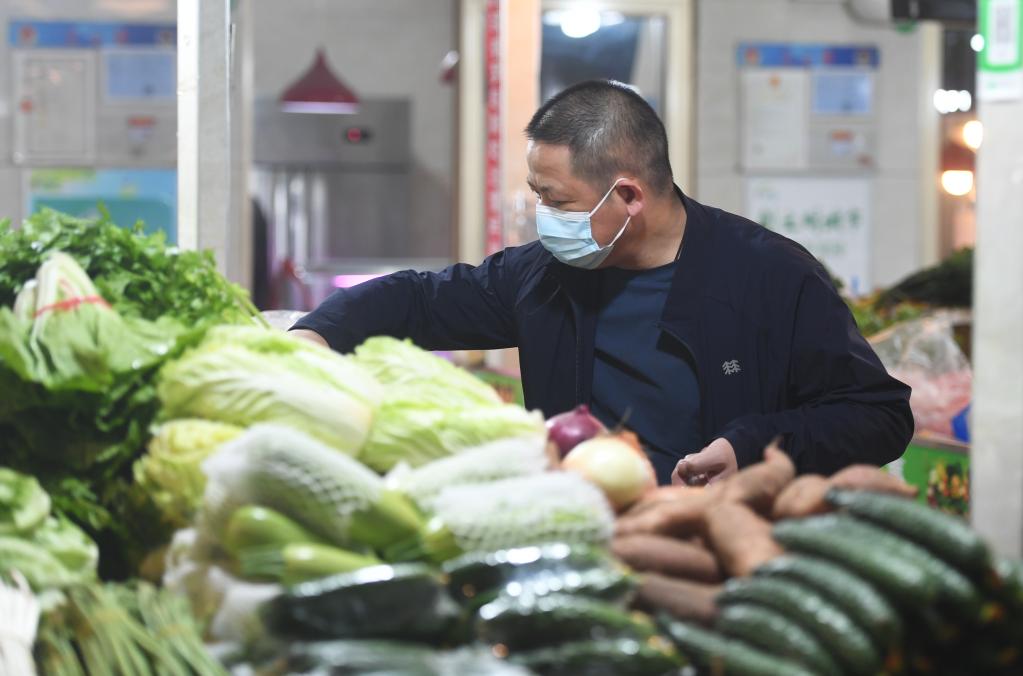
Citizens buy vegetables at Tabei Road Market, Yuhua District, Shijiazhuang City, Hebei Province. Xinhua News Agency reporter Zhu Xudong photo
What are the reasons for the rising prices of vegetables in various places?
According to industry analysts, this time of year is the time when "green and yellow are not connected". The listing of vegetables in summer basically ends, and a small number of vegetables are listed in autumn and winter, and the market supply is reduced, which will bring about an increase in vegetable prices.
"Adverse weather such as heavy rainfall and low temperature this year has amplified the seasonal fluctuation of fresh vegetable prices." Guo Liyan, director of the General Situation Office of China Macroeconomic Research Institute, said that since the middle and late September, the continuous low temperature and rainy weather in Shandong, Henan and Hebei have slowed down the growth of vegetables, and the humidity in the field has aggravated the harm of pests and diseases, which has delayed the listing of vegetables in many places or even reduced their production, causing a significant increase in vegetable prices.
According to the staff of Beijing Xinfadi Market, taking spinach as an example, due to continuous rainfall, spinach produced in Liaocheng, Shandong Province was soaked. At present, only a small amount of greenhouse spinach in Liaoning and other places can be listed, and the market supply has been greatly reduced, pushing the price of vegetables all the way up.
In addition, experts pointed out that China’s vegetable production areas and sales areas are relatively separated, and heavy rains and other weather have caused inconvenience to vegetable harvesting and cross-regional transportation, and the cost of acquisition and logistics has increased, which has also amplified the price fluctuation in the short term. Since the beginning of this year, the prices of chemical fertilizers and gasoline and diesel have risen, further raising the cost of vegetable production and circulation.
In order to ensure the stability of the people’s "food basket", many departments have recently introduced a series of measures to ensure supply and price stability.
The relevant person in charge of the Ministry of Agriculture and Rural Affairs said that experts and agricultural technicians will be organized to go deep into the fields to guide farmers to strengthen field management, improve the stress resistance and high yield of vegetables, and guide the implementation of disaster prevention and mitigation measures such as cold protection and insulation of protected vegetables and simple coverage of open-field vegetables in view of the cold wave and low temperature weather that may occur in the later period. At the same time, guide the affected areas and large and medium-sized cities to rationally arrange the variety structure and planting scale, develop fast-growing leafy vegetables and sprout vegetables according to local conditions, and increase market supply.
"The Ministry of Commerce pays close attention to the market supply and demand and price changes in the country and epidemic-prone areas. On the basis of strengthening monitoring and early warning, it deploys local governments to ensure the supply and stability of the daily necessities market this winter and next spring, timely puts government reserves, and urges commercial circulation enterprises to strengthen the connection between production and sales and increase the number of stocks in key periods." Shu Yuting, a spokesperson for the Ministry of Commerce, said on October 28.
Local governments and enterprises are also taking action — — Beijing has studied and formulated a plan to reduce the entry transaction fees in major agricultural products wholesale markets, which directly reduces the entry transaction costs of business merchants and transport drivers; Many wholesale markets in Shanghai have increased the supply of guest dishes by doing a good job of supplier linkage and "insufficient suburban dishes to supplement guest dishes". Gansu and Inner Mongolia have set up special material support working groups to jointly strengthen allocation and ensure stable market supply … …
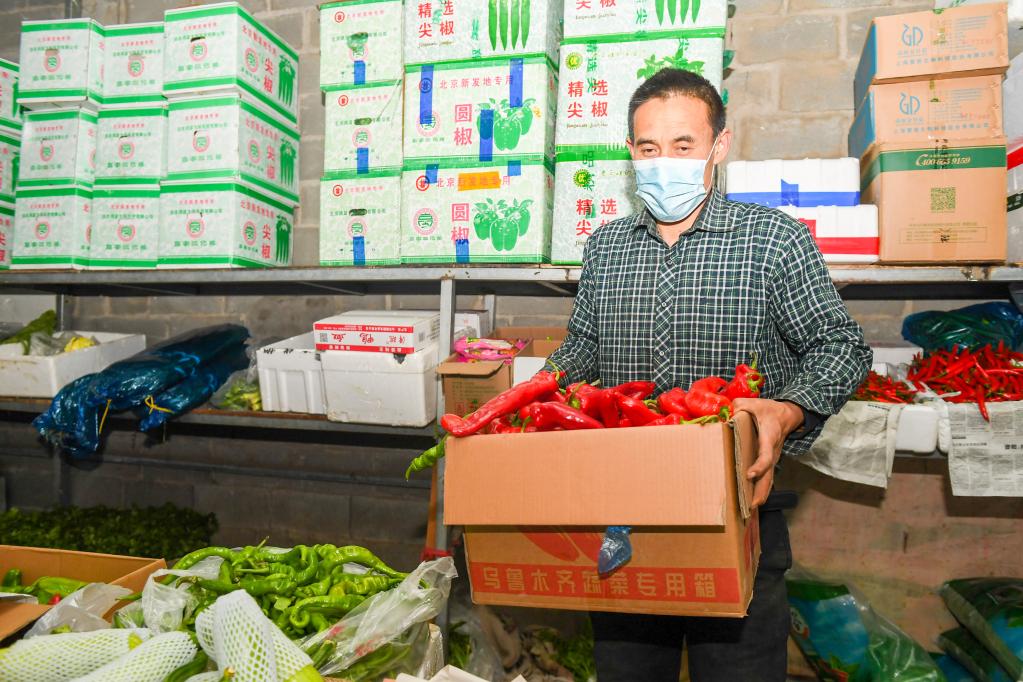
Hohhot, Inner Mongolia, coordinates large-scale agricultural products wholesale markets, supermarkets and logistics distribution enterprises, increases the transportation and distribution capacity of people’s livelihood materials, and ensures market supply. Xinhua News Agency reporter Peng Yuanshe
Zhang Jing, an associate researcher at the Institute of Agricultural Information, China Academy of Agricultural Sciences, analyzed that with the recovery of vegetable production capacity, some vegetables that have been put on the market are concentrated, and the supply of vegetables in autumn and winter is generally guaranteed, and the prices of some varieties are expected to fall later.
"The price of agricultural inputs and transportation costs remain high, and the meteorological department predicts that La Nina events will occur this winter, and extreme weather may occur, which will affect vegetable production in some areas, and the pressure of high price operation still exists." Zhang Jing said.
Experts suggest that all localities should reasonably arrange cross-regional procurement and transportation, replenish local fresh vegetable consumption in time, improve the mechanism of storing vegetables in winter, and take measures to ensure the supply and price stability of daily necessities such as vegetables. (Participating in writing: Wang Jing)